Quick Read:
- Your reproductive microbiome plays a powerful role in hormone balance, immune strength, and even cancer healing.
- Vaginal, cervical, and Uterine are the most common microbiomes that are part of your reproductive microbiome, and all influence your body’s ability to heal breast cancer.
- Therapies such as chemotherapy, radiation, and hormone-blocking medications (like Tamoxifen and aromatase inhibitors) can lower estrogen levels, damage delicate vaginal tissue, and reduce beneficial Lactobacillus bacteria.
Your gut isn’t your only microbiome.
Yep, it is true. In fact, your body is home to multiple microbiomes. They include your breast tissue [1], your skin, oral (teeth, gums, tongue, cheeks, etc.), and perhaps most overlooked of all: your reproductive microbiome (vaginal, cervical, uterine, and fallopian tubes). And just like your gut microbiome, your reproductive microbiome plays a powerful role in hormone balance, immune strength, and even cancer healing.
Imagine a flowing system: Mouth → Gut → Bloodstream → Reproductive Tract → Breast Tissue
Everything is communicating and connecting.
A New Frontier: The Reproductive Microbiome
The reproductive microbiome is no longer a fringe topic in research. They are now considered essential players in overall health, with profound implications for women navigating breast cancer, pregnancy, menopause, and all stages of their lives.
Emerging studies suggest that microbial imbalances (dysbiosis) in this area may:
- Influence how your body metabolizes estrogen
- Impact inflammation
- Interfere with oxidative stress
- Release endotoxins (toxic compounds) that affect the tumor microenvironment
In other words, it is not just about vaginal comfort or infections: it’s about whole-body healing.
The Reproductive Microbiome: 3 Key Areas Every Woman Should Understand
Your reproductive microbiome is a dynamic ecosystem of bacteria and other microbes within the female reproductive tract. You probably know about yeast infections, bacterial infections, dryness, and itchiness when your gut flora/microbiome is off. But it does so much more: your reproductive microbiome is an essential part of your hormone regulation, immune strength, inflammation control, and the overall health of your internal terrain.
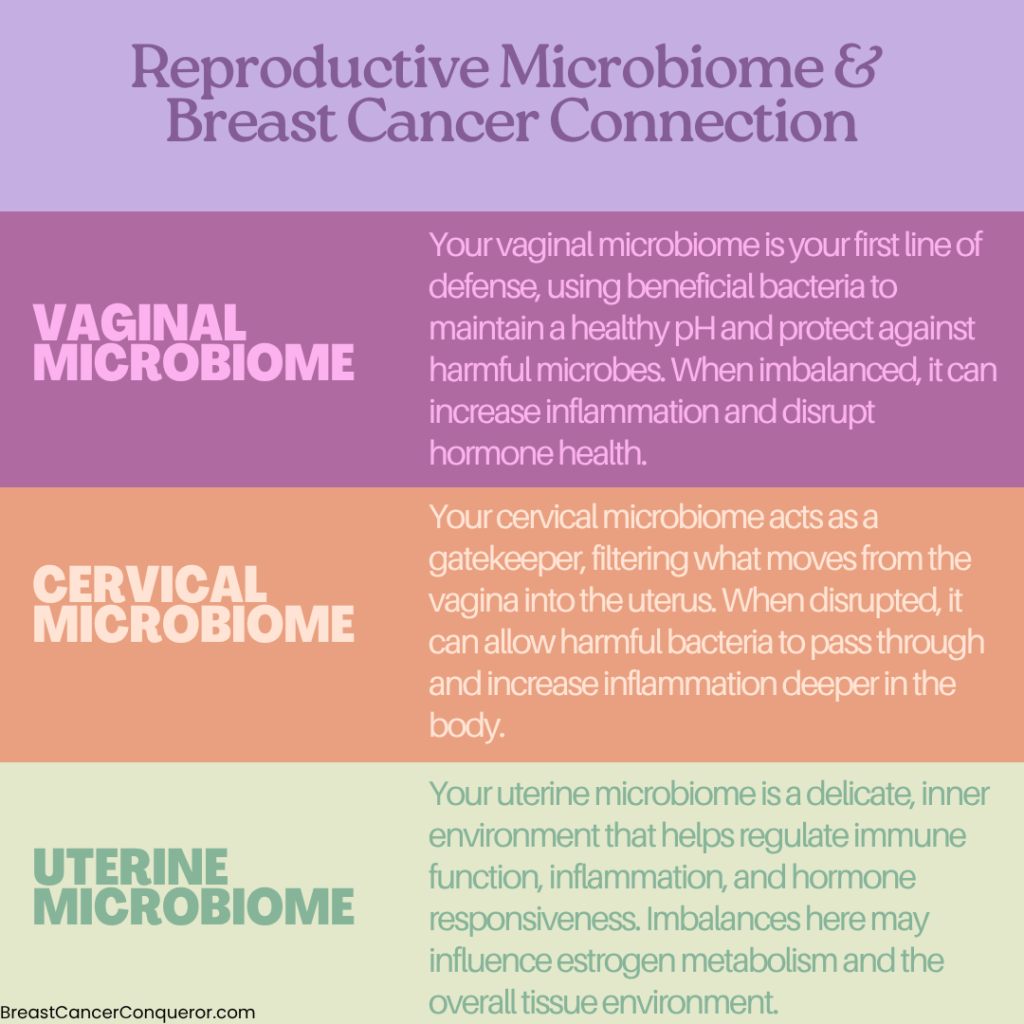
1. Vaginal Microbiome: Your First Line of Defense
Your vaginal microbiome is the most well-known and most researched part of the reproductive system. It is typically dominated by beneficial bacteria like Lactobacillus, which help maintain an acidic pH and protect against harmful microbes.
This environment acts as a protective barrier, preventing unwanted bacteria from moving upward into deeper reproductive tissues.
Why It Matters for Breast Cancer
When your vaginal microbiome is imbalanced (dysbiosis), it can: (Study [2])
- Increase local and systemic inflammation
- Disrupt hormone signaling, especially estrogen balance
- Allow harmful microbes to ascend into the uterus
Because inflammation and estrogen metabolism are both key drivers in breast cancer, this seemingly “local” imbalance can have far-reaching effects.
How to Support It
- Use pH-balanced, microbiome-friendly soaps and products. We use Good Clean Love [3] products, and you can get 15% of your first order with code: CANCERCONQUEROR.
 [4]
[4] - Don’t use synthetic fragrances and chemicals
- Support hormone balance
- Nourish your gut microbiome (they are deeply connected)
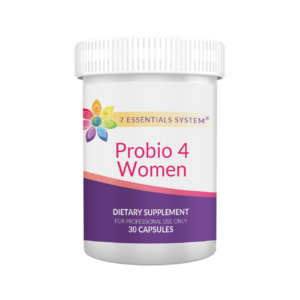
- Take vaginal microbiome-specific probiotics such as Probio 4 Women [4]
2. Cervical Microbiome: The Gatekeeper
The cervix sits between the vagina and the uterus, acting as a biological filter. Its microbiome is influenced by both vaginal and uterine environments, and it plays a crucial role in deciding what moves upward.
The cervix also produces mucus that:
- Traps harmful pathogens
- Supports beneficial bacteria
- Changes consistency based on hormonal cycles
Why It Matters for Breast Cancer
If the cervical microbiome becomes imbalanced: (Study [5])
- Its filtering ability weakens
- Harmful bacteria may pass into the uterus
- Inflammation can increase in deeper reproductive tissues
Your cervical microbiome can contribute to a more inflammatory internal terrain, something we know is closely tied to cancer progression. To learn more about the connection between inflammation and breast cancer, please review this blog post. [6]
How to Support It
- Maintain a healthy vaginal microbiome (this directly impacts the cervix)
- Avoid unnecessary antibiotics when possible
- Support immune health through intentional nutrition, sleep quality, and stress regulation
- Keep regular screenings (like Pap smears) to monitor changes
3. Uterine (Endometrial) Microbiome: The Inner Environment
Your uterus is now known to host a low-biomass yet highly important microbiome. This environment is more delicate and tightly regulated than the vagina, and it plays a role in:
- Immune strength
- Inflammation control
- Hormonal responsiveness
- Tissue health
Why It Matters for Breast Cancer
Emerging research suggests that uterine dysbiosis may: (Study [7])
- Influence estrogen metabolism
- Contribute to chronic inflammation
- Affect the local tissue environment
- Impact the tumor microenvironment
How to Support It
- Protect the vaginal microbiome (your first line of defense)
- Support estrogen balance through diet and detox pathways
- Reduce systemic inflammation
- Prioritize gut health, which influences hormone metabolism
In summary:
- The vagina protects
- The cervix filters
- The uterus regulates
Cancer Treatment, Vaginal Microbiome, and Intimacy
Of course, cancer treatments can be life-saving…but they can also significantly disrupt your vaginal microbiome, which is why so many women experience symptoms like dryness, irritation, and painful intimacy during and after treatment.
Therapies such as chemotherapy, radiation, and hormone-blocking medications (like Tamoxifen and aromatase inhibitors) can lower estrogen levels, damage delicate vaginal tissue, and reduce beneficial Lactobacillus bacteria. This often leads to a shift toward a less protective, more inflammatory microbial environment, along with higher vaginal pH and decreased tissue hydration. In real life, this feels like discomfort, burning, or pain during intercourse.
But here’s the empowering part: these symptoms are often tied to microbiome imbalance, not just irreversible damage. Supporting the vaginal microbiome through pH-balanced, non-disruptive products and gentle care can help restore tissue integrity, reduce inflammation, and rebuild comfort over time. To learn more about reclaiming intimacy during treatments, please review this blog post. [8]
Additionally, Good Clean Love [3] provides vaginal microbiome-loving lubricants, vaginal suppositories, and many other products made with their Bio-Match® Technology [9]. Get 15% of your first order [10] with code: CANCERCONQUEROR. To learn more about the products, listen to our podcast episode [10] with the founder on your next walk or long drive.
The Estrogen Connection
Estrogen is primarily metabolized in your liver and then sent to the gut for elimination or recycling, and your microbiomes (including reproductive) play a key role in determining whether it is excreted or reabsorbed. When microbial balance is disrupted, estrogen can be metabolized in less favorable ways, potentially contributing to:
- Estrogen dominance (learn more via this podcast episode [11])
- Increased inflammation that fuels cancer development
- Hormonal imbalances that may support tumor growth
- Microbial endotoxins may influence the tumor microenvironment, making it more or less favorable for cancer progression (Study [12])
In short, your reproductive microbiome may be one of many factors influencing your breast cancer healing journey.
Let’s Heal Your Whole Microbiome
As you know, your body is not made up of isolated systems. It’s a deeply connected network of microbiomes: from your mouth to your gut to your reproductive tract to your breast tissue [1]. All communicating, influencing, and supporting one another. And it’s the main reason why the 7 Essentials System® [13] was created. Because doing simple things like choosing microbiome-friendly products, nourishing your body with supportive foods and supplements [14], lowering inflammation, reducing toxins, strengthening your immune system, listening to your body, and so forth truly leads to transformational, full-body health and healing! We know that’s what you want, and we are here to help you achieve it every single day. You got this; we’ve got you.