Quick Read:
- Early studies have found that HPBCD significantly reduced tumor size in TNBC models.
- HPBCD has not yet been tested in humans and is not currently part of standard care.
- Natural support for TNBC includes drinking matcha tea, eating blueberries, taking a Vitamin D supplement, and consuming more cardamom.
At Breast Cancer Conqueror, we are constantly on the lookout for the most innovative and effective therapies. This includes medications, supplements, lifestyle changes, foods, and new options available to help you truly experience transformational health and healing. This is why we research daily for our weekly blog post, interview experts on our podcast [1], and host virtual and in-person retreats. [2]
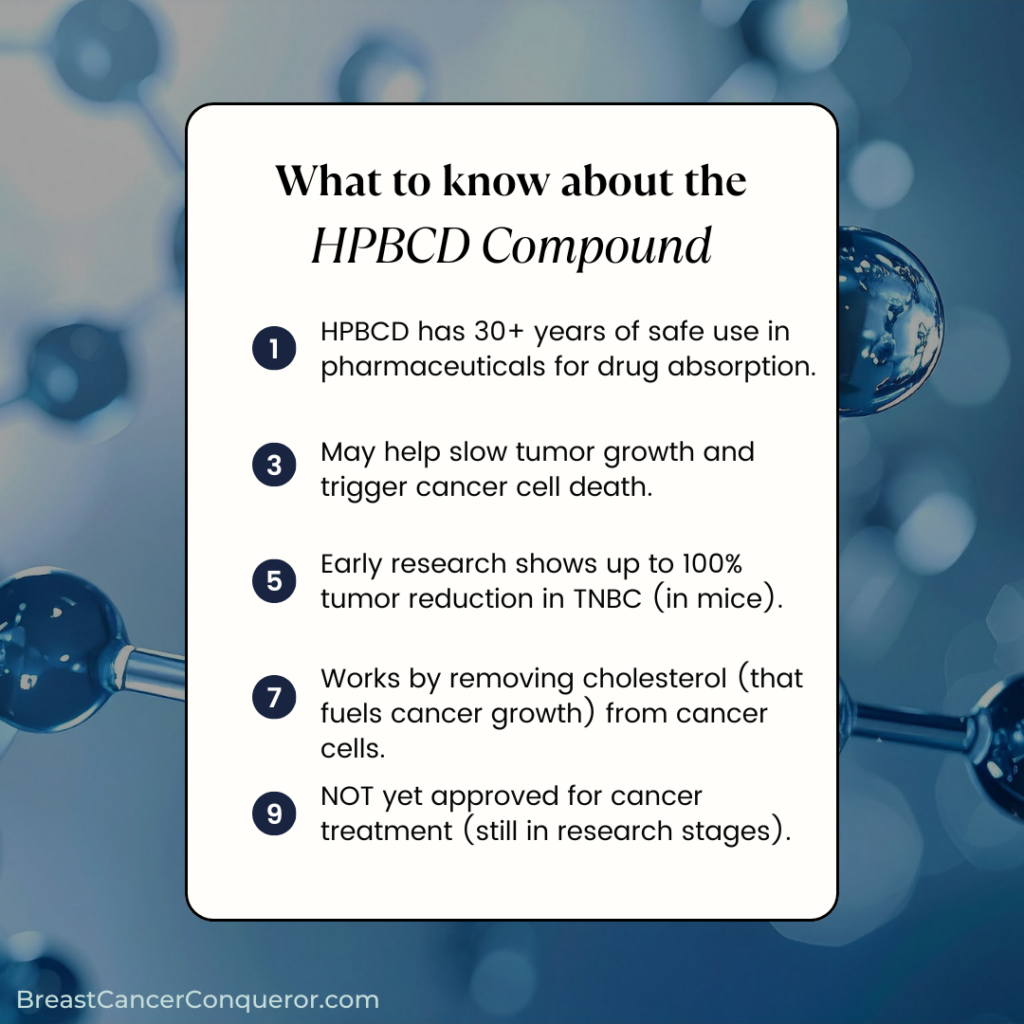
One new idea that has caught our eye is: 2-Hydroxypropyl)-β-cyclodextrin, commonly known as HPBCD. Its origins date to the 1970s and are an FDA-approved supportive ingredient that improves drug solubility (especially for IV medications), enhances the bioavailability of poorly absorbed drugs, and masks unpleasant tastes in oral medications. HPBCD has a well-established safety profile (in non-cancer uses). It is known in the pharmaceutical world and has 30+ years of research on how it behaves in your body.
However, what is new is that scientists are beginning to understand its deeper effects, especially its ability to influence cholesterol levels in cells and overall cellular health. This is why it’s now being explored in areas like breast cancer, and especially TNBC (Triple Negative Breast Cancer).
A recent study [3] found that HPBCD significantly reduced tumor size in TNBC models. In early-stage cases, tumor reduction reached as high as 100% in mice, with some models showing no relapse after treatment.
These findings are supported by additional research indicating that HPBCD not only reduces tumor burden but may also improve survival outcomes. Its effects have also been observed in other cancers, such as leukemia, where disrupting cholesterol balance appears to impair cancer cell viability.
And while this IS thrilling news, we realistically note that HPBCD has not yet been tested in humans and is not currently part of standard care. That being said, it is certainly something to keep your eye on and to discuss with your medical team and BCC coach [4].
And without further ado, let’s walk through what HPBCD is, how it works, and why researchers are paying close attention.
What Is HPBCD?
HPBCD is a highly water-soluble compound derived from starch. It belongs to a family of molecules called cyclodextrins. They are known for their unique ability to “capture” and carry fat-soluble substances.
Because of this, HPBCD has long been used in pharmaceuticals as a kind of helper molecule. It improves the solubility and stability of drugs that would otherwise be difficult for the body to absorb.
In simple terms, it makes certain compounds easier for your body to use effectively.
Recently, researchers began to notice something unexpected. Beyond its role as a delivery tool, HPBCD appeared to have biological effects of its own, particularly in how cells manage cholesterol and overall health.
The Cholesterol and Cancer Connection
Cholesterol isn’t just about heart health; it also plays an essential role in every cell in your body. It helps maintain cell membranes, supports hormone production, and enables proper cellular communication. However, cancer cells tend to hijack this system.
Aggressive cancers like TNBC often rely heavily on altered cholesterol metabolism to fuel their growth. Meaning, cholesterol serves as a building block for rapidly dividing cells and supports signaling pathways that allow tumors to grow, spread, and evade the immune system.
On the flip side, if you can disrupt how cancer cells access and use cholesterol, you may weaken them at their core. THIS is why we are constantly looking for ways to create a body that doesn’t give cancer cells a chance to survive!
Why HPBCD May Be a Solution
HPBCD acts as a cholesterol-depleting agent.
It binds to cholesterol within cells and helps remove it, essentially starving cancer cells of a resource they depend on for survival. Cancer cells begin to lose structural stability, which can trigger apoptosis, or programmed cell death. Without sufficient cholesterol, the signaling pathways that drive tumor growth become disrupted, slowing progression. Reducing cholesterol within tumors may impact their ability to spread, since cholesterol is involved in cell movement and metastasis.
Another exciting finding is how this process may influence your immune system. This 2025 study [5] suggests that lowering cholesterol within tumors can improve T-cell infiltration and attack cancer cells, essentially making the tumor more visible to your body’s natural defenses.
To learn more about why HPBCD may be a powerful addition to breast cancer treatments in the near future, please review this study [3], and this one specifically focused on TNBC [6]. But keep in mind that, as we have mentioned before, most of the research on HPBCD and cancer is still in the preclinical stage, meaning it has primarily been studied in laboratory and animal models. Large-scale human clinical trials are still needed to determine its effectiveness, safety, and appropriate use in cancer care.
Natural Support for TNBC That You Can Do Today [7]
[7]
If you have TNBC, Mother Nature is on your side. There are plenty of natural remedies that you can use, along with treatments (chemotherapy, immunotherapy, surgery, radiation, etc.), to create vibrant health for yourself.
A few simple yet powerful things you can do today to heal TNBC include:
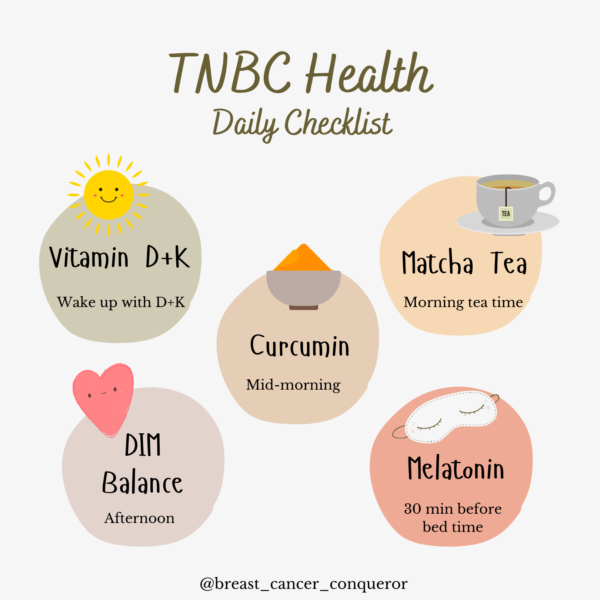
- Add in more Vitamin D+K. Studies [8] have found that Vitamin D given to a mouse model suppressed multiple proteins required for TNBC cell survival. Vitamin D is also critical for almost every aspect of your health—get all the sunny details via this blog post [9] and order from our signature line here [7].
- Drink Matcha Tea [10]. Matcha tea provides up to 137 times more EGCG than regular green tea, so drink up! EGCGs may kill cancer cells by limiting angiogenesis, preventing DNA damage, and stopping the production of breast cancer stem cells. Matcha is also packed with antioxidants, vitamin C, tocopherols, carotenoids, selenium, zinc, chromium, and manganese. Sip in more info via this blog post. [11]
- Eat blueberries by the handful. They fill your body with cancer-destroying Natural Killer (NK) cells and slow the growth of Breast Cancer Stem Cells (BCSC). This study [12] found that these berries can cause apoptosis (AKA “the death of cells”) in TNBC cells!
- Consume more cardamom. This tantalizing spice activates cell death through signaling to induce apoptosis in malignant cells. It also alters the expression of regulatory proteins during malignant cell division. In real words: It helps stop cancer growth! Bite into recipes and more details via this blog post. [13]
For additional ways to use natural therapies to stop TNBC, please review this blog post [14] and talk with your BCC coach [4].
 [14]
[14]
Modern Science Meets Ancient Wisdom
HPBCD is a powerful reminder that science is evolving, and researchers are better understanding the WHY behind tumor growth. Your role in this journey is not to chase every new discovery, but to stay informed, ask questions, and work with a trusted care team to determine what is right for you. Take full advantage of modern science and ancient wisdom.
Healing happens when treatment meets strategy, modern science meets ancient wisdom. Daily, take advantage of Mother Nature’s natural healers, such as blueberries, and pair them with a strategy to make your treatments as effective as possible.
You have a big, bold, and beautiful life to live. And it all starts with vibrant health. Let’s make that happen, together!