
Quick Read:
- Probiotics and postbiotics can help reduce excessive inflammation, strengthen your immune system, and help your body respond better to treatments such as chemotherapy and radiation.
- Postbiotics are the beneficial compounds produced by probiotics. They create an internal environment where cancer struggles to survive.
- You can get postbiotics from supplements and foods such as kimchi, sauerkraut, yogurt, miso, and kombucha.
“All disease begins in the gut” – Hippocrates. Which also means: All health begins in the gut.
So let’s “go with our gut feeling” and make gut health a top priority in your healing journey. By now, it’s not new information that your microbiome, the ecosystem of bacteria living in your gut and even within breast tissue, plays a critical role in immune function, healthy estrogen metabolism, happiness, inflammation, detoxification, and ultimately, cancer risk and recovery. For a quick refresher on the gut-cancer connection, please read this blog post.
It’s also known that probiotics play a powerful supportive role in elevating your gut health for maximum effectiveness, which is why Probio 4 Women and Probiotic Support made it into our signature line. Probiotics have also been shown to modulate immune responses and promote anti-tumor activity, including helping the body recognize and respond to abnormal cells.
Probiotics also influence how your body responds to treatments such as chemotherapy and immunotherapy by shaping immune signaling and inflammatory pathways. Meaning, they can help your immune system work better and stay more balanced, which may make treatments like chemotherapy and immunotherapy work more effectively. They also help calm down excessive inflammation in the body, so your system isn’t overwhelmed and can respond to treatment in a healthier, more controlled way.
Now, there’s an intriguing new player entering the conversation: postbiotics.
But first, before continuing to read this blog post, stop to celebrate yourself. YOU made the decision to take action and find Breast Cancer Conqueror to stay informed on the latest research, integrative therapies, and empowering strategies that go beyond conventional care to support true healing. By getting curious and taking action to support your gut health, you’re already stepping into a powerful, proactive role in your healing journey: one that honors your body’s incredible ability to recover and thrive.
The Gut–Breast Cancer Connection
Before we get into the trilogy of prebiotics, probiotics, and postbiotics, let’s briefly chat about the gut-cancer connection.
Your gut is home to trillions of microorganisms that influence nearly every system in your body. This includes:
- Immune system regulation
- Hormone metabolism (especially estrogen)
- Inflammation levels
- Detoxification pathways
Your microbiome doesn’t just live in your gut. It also exists in breast tissue itself, and differences in microbial composition have been observed between healthy and cancerous breast tissue. For a deeper dive, please review this blog post. When the microbiome becomes imbalanced (a condition known as dysbiosis), it can disrupt estrogen metabolism and contribute to tumor growth. For more insight into your microbiome and breast cancer, review this blog post carefully.
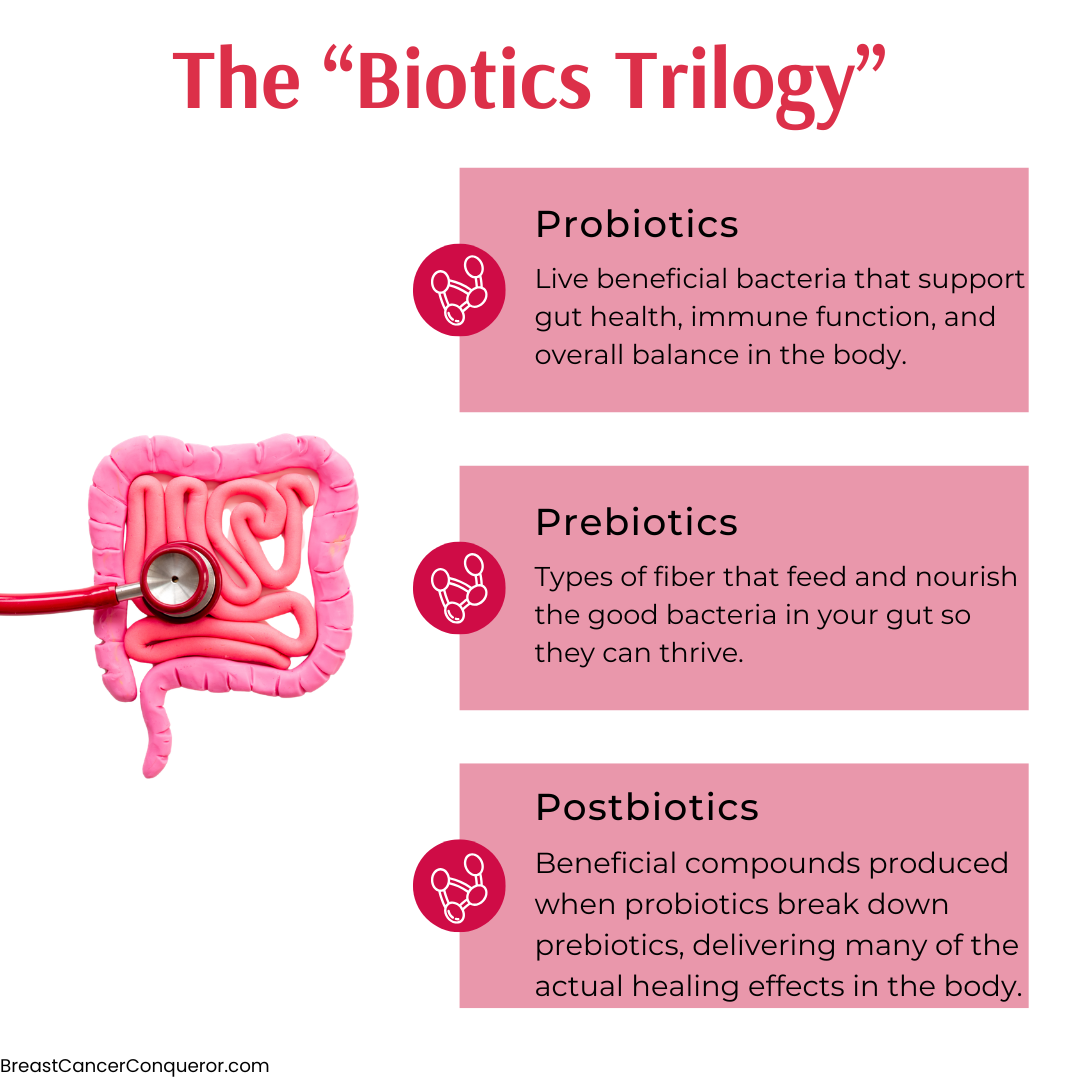
The “Biotics Trilogy”
Probiotics, prebiotics, and postbiotics?! Yep, this could get confusing and overwhelming, so let’s break it down.
Probiotics. Beneficial bacteria naturally live in your body, especially in your gut. However, your levels can be depleted by factors such as antibiotics, stress, poor diet, and environmental toxins. While your body hosts them, you often need to replenish and diversify them through food (like fermented foods) and targeted supplements, especially during healing.
Prebiotics. They are not bacteria, but rather types of fiber that feed your good bacteria. Your body doesn’t make them, so you must get them from foods (flaxseeds, leafy greens, berries, garlic, etc.) and supplements to keep your microbiome thriving.
Postbiotics. They are beneficial compounds (like short-chain fatty acids) produced inside your body when probiotics break down prebiotics. Postbiotics are actually the heroes that do much of the healing work. So while your body can make postbiotics naturally, it can only do so if you have enough good bacteria and the right fuel to support them.
Think of it like this:
- Probiotics = the workers
- Prebiotics = the food for the workers
- Postbiotics = the results of their work
By supporting all three, you create a thriving internal ecosystem that kicks the cancer out!
Key Benefits for Breast Cancer Healing
When used correctly, probiotics, prebiotics, and postbiotics may (2026 study):
- Support detoxification of excess estrogen
- Reduce chronic inflammation
- Improve digestion and nutrient absorption
- Strengthen immune resilience
- Help repair gut damage from treatments
 However, not all supplements are created equally, so be smart with where you spend your money.
When choosing a supplement, look for:
- Multiple strains (especially Lactobacillus and Bifidobacterium)
- Clinically relevant doses
- Strains that support women’s health
To give you the best, we created our own:
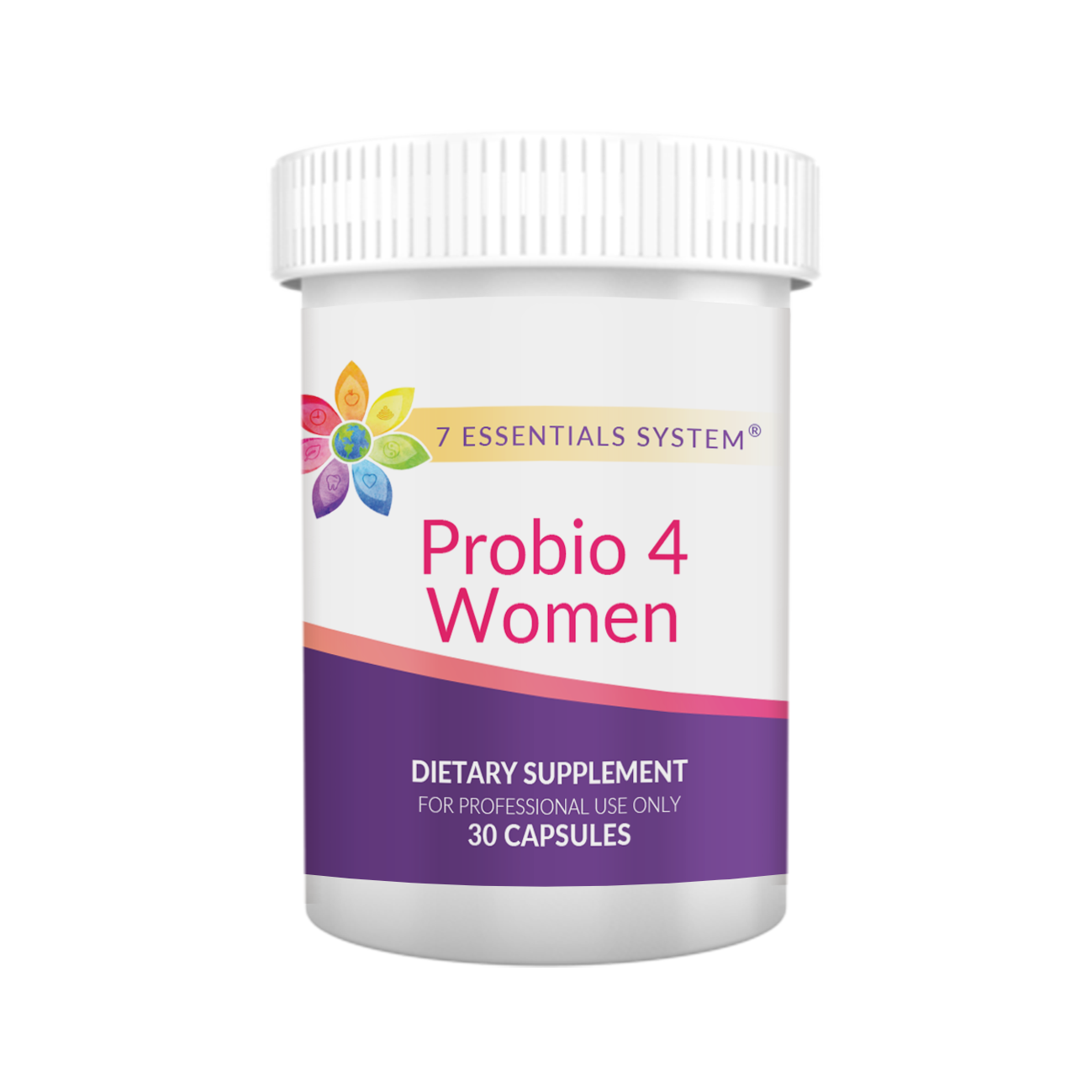
- Probio 4 Women: Designed specifically to support women’s microbiome balance, including vaginal and gut health. Buy Probio 4 Women here.
- Probiotic Support 15B: A broad-spectrum formula to help restore gut diversity and resilience. Buy Probiotic Support 15B here.
The Gut Health Bundle
Dr. Karlfeldt (You may recognize him from many of our online events and The Karlfeldt Center) curated the Gut Health Bundle, which is basically the holy grail of all things gut health.
There are also many companies that sell prebiotics, probiotics, and postbiotics combinations. Do your research and discuss with your medical team and BCC Coach before adding them to your routine.
Postbiotics: The Next Evolution of Probiotics in Cancer Care
Here’s the latest research that you may not know about yet, and it’s something our nerdy integrative health minds are super excited about!
While probiotics are live bacteria, postbiotics are the beneficial compounds they produce.
These include: Short-chain fatty acids (like butyrate), enzymes, and peptides. Postbiotics are essentially the “active ingredients” responsible for many of the benefits we attribute to probiotics and deliver direct biological effects.
Recent research highlights their ability to:
- Modulate the immune system
- Reduce inflammation
- Induce apoptosis (programmed cancer cell death)
- Inhibit tumor growth and proliferation
In other words, postbiotics may help create an internal environment that is far less favorable for cancer to thrive. Postbiotic therapy may be so effective it is currently being explored as an adjunct therapy alongside chemotherapy and immunotherapy to enhance outcomes.
These are the types of things that make our integrative oncology hearts sing!
Get Prebiotics and Postbiotics From Food
While supplements are powerful, don’t underestimate the healing potential of real food. Below are a few of our research-backed favorites.
Prebiotics:
- Dandelion greens (Sip on this healing dandelion tea)
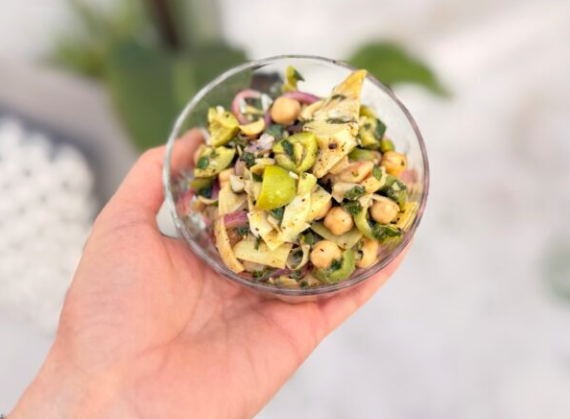
Marinated Za’atar Bean & Olive Salad - Artichokes (Enjoy these artichoke recipes)
- Garlic (Check out garlic’s other heroic benefits here)
- Leeks (Savor this delicious and anti-inflammatory leek soup)
- Onions (Make this cancer healing salad by the batch!)
- Asparagus (We love this asparagus soup)
- Flaxseeds (Learn more about these tiny healers here)
Postbiotics:
- Yogurt (Make sure it is organic)
- Kimchi (Delight in this Galbi recipe)
- Sauerkraut (Try Dr. V’s recipe)
- Miso (Devour all these miso recipes)
- Kombucha
All of the above create a healing inner body terrain where healing can happen! But also remember that taking away the bad stuff is equally important as adding in the good. For example, filling your plate with processed foods and sugar undermines the benefits of eating flaxseeds and miso. Try to go for the 80/20 rule. 80% cancer healing foods and 20% everything else. Because you are a human, not a robot.
Gut Check.
Your microbiome is one of the most powerful tools you have. Make sure you are checking in on it, prioritizing it by nourishing it with probiotics, supporting it with pre- and postbiotics, and creating an internal environment rooted in health.
Remember that all diseases begin in the gut, but so does all healing. Make your gut a healthy, happy, and thriving place!