
At a Glance:
- Breast cancer vaccines train your immune system to identify and attack cancer cells.
- There are approximately 15 active breast cancer vaccine clinical trials underway in the United States, including several that are close to becoming available for the public.
- Vaccines are just one category within the broader field of cancer immunotherapy. There are several immunotherapy options available now that could tremendously support your breast cancer healing journey. See below for a list of options to discuss with your medical team.
For decades, the idea of a breast cancer vaccine designed to prevent, treat, and reduce the risk of recurrence sounded like science fiction. Today, it’s one of the most exciting frontiers in cancer research. And since we are your go-to spot for non-biased and integrative education, care, and support, we are here to tell you all about it in an easy-to-understand way.
Modern Breast Cancer Vaccines Will Be Custom-Coded Genetic Blueprints
A cancer vaccine is not a traditional shot that stops an infection before it starts. Instead, modern therapeutic and personalized cancer vaccines would be custom-coded genetic blueprints. It would often be delivered via mRNA in fat droplets or implantable biomaterial disks designed to train a woman’s own immune system to hunt down and destroy active tumor cells. 2025 marked a pivotal year in breast cancer research, with significant advances in prevention, treatment, risk prediction, and immunotherapy! (Studies) Among the most promising developments is the rapid progress being made in breast cancer vaccines.
While these vaccines are still being studied and are not yet considered standard care, the momentum is undeniable. Multiple clinical trials are currently underway exploring immune-training vaccines that may reduce recurrence risk and improve long-term outcomes for breast cancer thrivers. Additionally, several therapies that offer similar immune-system benefits are available today and are listed at the end of this blog post.
What Are Breast Cancer Vaccines?
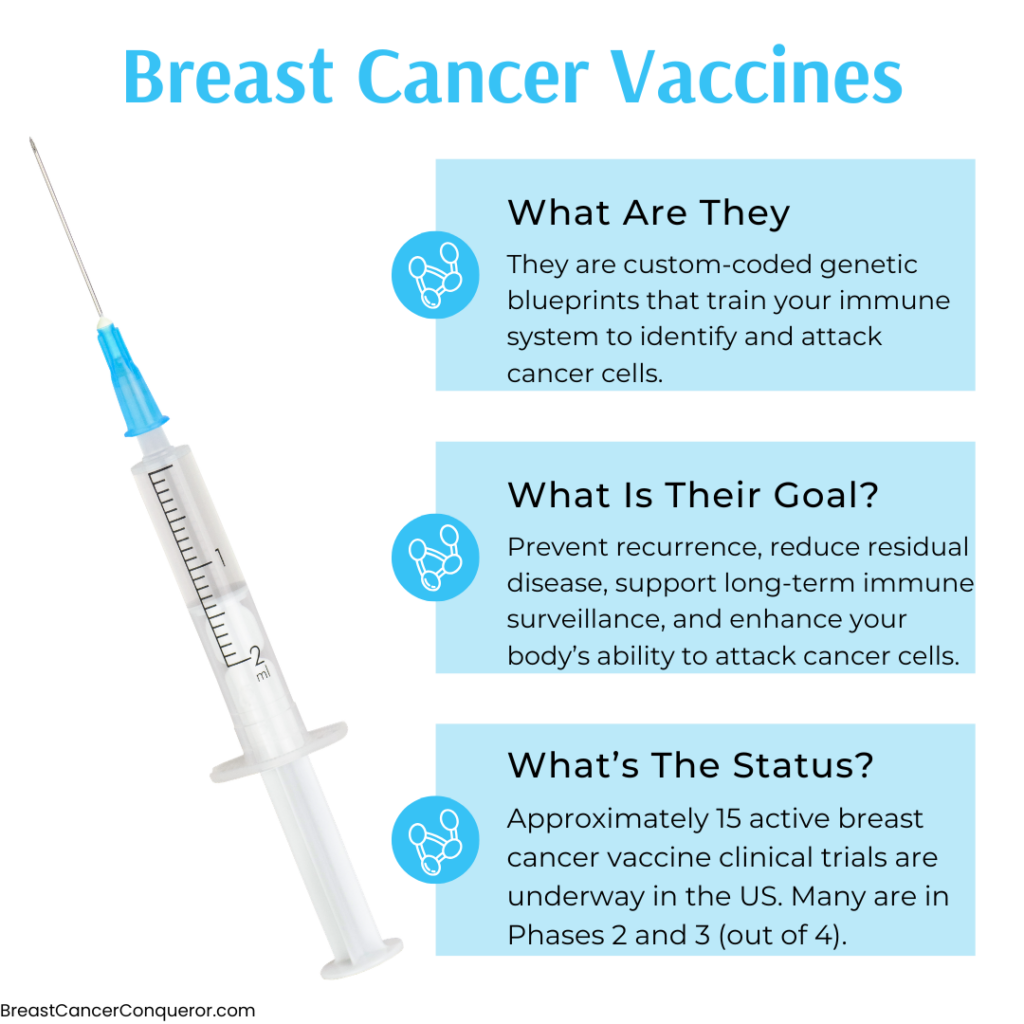
Unlike traditional vaccines, which protect against infectious diseases such as measles, cancer vaccines train your immune system to identify and attack cancer cells.
Researchers have discovered that many breast cancer cells express unique proteins, called tumor antigens, which are the backbone of modern immunotherapy and cancer vaccines. Tumor antigens are displayed on their surface and can be recognized by the immune system. They act as biological “red flags,” allowing T-cells and other parts of your immune system to distinguish malignant cells from healthy tissue and target them for destruction.
Cancer vaccines introduce these antigens to the immune system, essentially teaching immune cells to recognize them as threats. Once trained, the immune system can develop stronger surveillance capable of identifying and destroying cancer cells that might otherwise evade detection.
The goal is to:
- Prevent recurrence
- Reduce residual disease
- Support long-term immune surveillance
- Enhance the body’s ability to target cancer cells naturally
All of the above represent a major shift in oncology: from simply destroying tumors to educating the immune system to provide ongoing protection.
Why Is There So Much Excitement Right Now About Cancer Vaccines?
For years, cancer vaccine research produced mixed results. Scientists struggled to identify the right targets and generate strong enough immune responses. However, lately, advances in genetics, tumor sequencing, immunology, integrative care, and personalized medicine have dramatically changed the landscape.
Researchers are now developing vaccines that target specific breast cancer markers, including:
- HER2
- MUC1
- α-Lactalbumin
- hTERT
- Other proteins associated with breast cancer growth and recurrence
There are approximately 15 active breast cancer vaccine clinical trials underway in the United States, including several Phase 2 and Phase 3 studies. Most clinical trials have 4 primary phases, with Phase 4 being post-marketing, which is conducted after the drug is FDA-approved and available to the public. (Report) Even more exciting, some researchers are taking personalization even further by designing vaccines based on an individual’s unique tumor characteristics. This type of precision medicine could eventually allow treatment plans to be tailored specifically to each patient’s cancer biology.
How Cancer Vaccines May Help Prevent Recurrence
One of the most intriguing aspects of vaccine research is its potential role after conventional treatment (such as chemo or radiation) has ended. Researchers believe vaccines may be particularly effective when tumor burden is low: after the visible cancer has been removed and only microscopic disease may remain. At this stage, the immune system may have a better chance of identifying and eliminating remaining cancer cells before they can establish new tumors.
Early research suggests that cancer vaccines may:
- Strengthen immune surveillance
- Reduce recurrence risk
- Support long-term remission
- Help the immune system remember cancer-specific targets
In many ways, this strategy aligns with a core 7 Essentials System® principle: create an internal environment where cancer can not survive.
Where Breast Cancer Vaccines Fit Into Immunotherapy
As excitement grows around breast cancer vaccines, it’s important to understand that vaccines are just one category within the broader field of cancer immunotherapy. For a deeper dive into immunotherapy research and options, please review this blog post.
Here’s the breakdown:
Cell-Based Therapies
These therapies use living immune cells to identify and destroy cancer cells. Examples include Natural Killer (NK) cell therapies, T-cell therapies, and CAR-T cell therapies. Learn more via this study on how it is especially helpful for treatment-resistant and aggressive cancers.
Exosome Therapies
Exosome therapies utilize microscopic signaling particles released by immune cells. NK Cell Exosome Therapy, for example, delivers immune-supportive messages and proteins that may help the body recognize and respond to cancer more effectively.
Checkpoint Inhibitors
Cancer cells often develop ways to hide from the immune system. Checkpoint inhibitors help remove these “brakes,” allowing immune cells to recognize and attack cancer more efficiently. Learn more via this study.
Monoclonal Antibodies
These lab-created antibodies are designed to attach to specific markers on cancer cells. Once attached, they can either block growth signals or flag the cancer cell for destruction. (Study)
Immune Modulators
These therapies help strengthen and regulate overall immune function. By doing so, you are creating an environment that supports a more balanced and effective immune response.
While breast cancer vaccines such as HER2 and α-lactalbumin vaccines are generating tremendous excitement in clinical trials, other advanced immunotherapies are currently available for use.
These include:
- Dendritic cell therapy. It is often considered the closest to a personalized therapeutic cancer vaccine. This is because it trains the immune system to recognize tumor-specific antigens by using your own immune cells to create a targeted response. Get all the details via this blog post.
- NK cell exosome therapy. For more insight into this therapy, please listen to this podcast episode and review this blog post.
- The Cancer BioShield™ program. It’s a revolutionary multi-model approach designed to reverse immune collapse and empower the body to heal itself from the inside out. Learn more about it here.
As we always say: You have OPTIONS! Many of the vaccines and therapies mentioned pair well with traditional treatments and can even make them more effective while reducing side effects through the power of bolstering your immune system.
Why the Immune System Matters
Every day, your immune system identifies and removes abnormal cells before they become problematic. When immune function is compromised by chronic inflammation, toxicity, nutrient deficiencies, stress, poor sleep, or treatment-related side effects, this surveillance system may become less effective.
This is the major reason why a comprehensive healing strategy, such as the 7 Essentials System®, is quintessential for healing and long-term vitality. Because vaccines and immunotherapies may provide powerful new tools, they work best within a healthy biological terrain.
The Future of Breast Cancer Treatment Is Integrative
One thing we know for sure is (and something that Dr. V would constantly say: “One thing did not cause the cancer, and one thing will not cure it.”
Yes, chemo may be essential for your healing journey… and a vaccine, changing lifestyle habits, adding strategic supplements (such as the Daily Essentials Bundle), focusing on healing your inner words and managing stress, and so many other supportive therapies will also make a massive difference. THIS is why Dr. V created the 7 Essentials System®, and you can partner with a private coach to curate a customized healing plan in collaboration with your medical team.
As for breast cancer vaccines, recent studies have shown variable results, particularly in advanced-stage disease where the immune system may already be significantly compromised. But before they are provided to the general public, researchers must continue to refine vaccine designs, improve antigen selection, and personalize treatments to maximize effectiveness.
But all in all, this is incredibly exciting news as vaccines could be a strong part of a comprehensive treatment plan that could include:
- Conventional oncology treatments
- Targeted therapies
- Immunotherapy
- Cancer vaccines
- Integrative medicine approaches
- Strategic lifestyle changes (diet, mood, exercise, toxin reduction, etc.)
Rather than relying on a single intervention, we are focused on helping you create a plan that strategically combines therapies to support both tumor control and immune function and to transform your mind, body, and soul!
Don’t Wait; Start Now.
The pace of innovation in breast cancer research is rapidly accelerating. Scientists now have access to technologies unimaginable just a decade ago, enabling them to better understand cancer biology, identify risk factors, personalize treatments, and harness the immune system.
Breast cancer vaccines represent one of the most exciting developments in this evolution. The idea that we may someday train the immune system to prevent recurrence before it starts is no longer merely theoretical; it is being actively explored in laboratories and clinical trials around the world.
Every breakthrough brings us one step closer to more personalized, less toxic, and more effective approaches to healing.

However, even if a vaccine isn’t available yet, there is SO much you can do today.
Start by picking one of the 7 Essentials from our 7 Essentials System® and do the real work. Make the changes. Do it for your current and future self. You have a big, bold, and beautiful life to live. Create a body that delivers the life you want to experience.
And always know that we are here for you every step of the way through our Conqueror Community online membership. Inside the Conqueror Community, you’ll receive trusted guidance, practical support, and a compassionate community that helps you move forward with confidence, without the overwhelm. No matter where you are on your journey, this community is your home base. See you there!