Quick Read:
- When thyroid function goes awry, it may not only affect energy and mood; it may also intersect with breast cancer risk and outcomes.
- Thyroid dysfunction does not cause breast cancer. However, growing evidence shows that certain thyroid conditions and hormone patterns are associated with changes in breast cancer risk, breast tissue behavior, and outcomes.
- Both thyroid and breast tissue actively use iodine, and many women are chronically iodine-deficient.
Dr. V was the picture of health—and she still got breast cancer, twice! However, as we all know but often don’t like to admit, the exterior appearance doesn’t tell the whole story of what is actually happening within your universe: your body, mind, soul, and thyroid. Once she got her detective hat on and connected the dots, she realized iodine levels were low, thyroid was off, and both were connected, contributing to possible cancer growth.
This was Dr. V’s story because thyroid health is rarely part of the breast cancer prevention conversation. Yet research continues to show that the thyroid (a small, butterfly-shaped gland in the neck) plays a central role in regulating metabolism, hormone production, immune function, and cellular health.
Therefore, thyroid health should be moved from a side issue to a mainstay in the vibrant health conversation, which is why we are writing this blog. Because when thyroid function goes awry, it may not only affect energy and mood; it may also intersect with breast cancer risk and outcomes. And there’s plenty of credible research to back it up. Let’s dive in!
But first, what are some signs of thyroid trouble?
- Persistent fatigue or brain fog
- Weight changes without explanation
- Anxiety or depression that doesn’t improve
- Irregular cycles or hormonal imbalance
- Tremors
- Insomnia
- Heat or cold intolerance
- Heart palpitations
- Breast cancer diagnosis, recurrence, or high-risk status
- Chronic stress or adrenal symptoms
Are Thyroid Disorders and Breast Cancer Connected?
The short answer is yes. But not in a simple, direct way.
Thyroid dysfunction does not cause breast cancer. However, growing evidence shows that certain thyroid conditions and hormone patterns are associated with changes in breast cancer risk, breast tissue behavior, and outcomes.
This connection appears to involve three main pathways:
- Hormone signaling, especially estrogen-like effects of thyroid hormones. (2023 study [1])
- Autoimmune and inflammatory activity. (2022 study [2])
- Stress and adrenal (HPA axis) dysregulation (2021 study [3])
Ok, but what do those three points mean in real life for me? Let’s break it down.
Thyroid Hormones & Breast Tissue Growth
Thyroid hormones regulate metabolism, but they also influence cell growth and differentiation, including in breast tissue.
Hyperthyroidism (Overactive Thyroid)
Research consistently shows a stronger association between hyperthyroidism and breast cancer risk. (2025 study [4])
- Elevated thyroid hormone levels can stimulate breast cell proliferation.
- Thyroid hormones can activate estrogen receptors in breast tissue. (2024 study [5])
- Women with hyperthyroidism often have higher density, a known breast cancer risk factor. Learn how to decrease breast density via this blog [6].
This does not mean hyperthyroidism causes breast cancer, but it can promote it. Chronically elevated thyroid hormones may create a biological environment that supports faster cancer cell growth, increasing vulnerability alongside other risk factors.
Hypothyroidism (Underactive Thyroid)
The relationship between hypothyroidism and breast cancer is less direct. While many studies state that it does not increase your risk of breast cancer, it can still affect breast cancer biology indirectly. This is through its effects on hormones, inflammation, metabolism, and immune function. To make any set statements, more research is needed.
However, what matters most may not be hypothyroidism itself, but the downstream effects:
- Slower estrogen clearance
- Impaired detoxification pathways (Learn why healthy detox pathways are crucial via Essential #2: [7] Reduce Your Toxic Exposure)
- Chronic inflammation (Learn more about the connection between cancer and inflammation here [8])
- Metabolic dysfunction (Learn more about the Metabolic Theory here [8])
- Autoimmune activity
Autoimmune Thyroid Disease
One of the strongest connections between thyroid health and breast cancer lies in autoimmune thyroid disease, particularly Hashimoto’s thyroiditis. Read this 2025 study [9] for a deeper review. This is a well-known fact and has been grounded in a myriad of studies for decades.
Women with autoimmune thyroid conditions often show:
- Higher rates of breast cancer
- Increased breast density
- Shared immune markers between thyroid and breast tissue
This suggests that immune dysregulation and chronic inflammation may be shared root contributors, not just hormone imbalance, as most people assume.
This is because breast cancer is an immune-influenced condition. Autoimmunity creates an inflammatory environment that can impair immune surveillance and cellular repair.
Iodine: A Super Nutrient for Thyroid & Breast Health
Both thyroid and breast tissue actively use iodine, and many women are chronically iodine-deficient. This deficiency is often the underlying issue with Hashimoto’s and even breast cancer. To learn more about iodine, which could be your missing ingredient, please listen to this podcast episode with Dr. Brownstein [10]. If you need more iodine in your life, order Iodine Support [11] directly from our signature line.  [10]
[10]
Low iodine levels have been associated with (just a few things, the list could be chapters long!):
- Fibrocystic breast changes (Learn more via this blog post [12])
- Thyroid dysfunction
- Increased estrogen sensitivity in breast tissue
- Estrogen dominance (Listen to this podcast episode [13] and read this blog post [14] to learn more)
- Brain fog, memory issues, and lower cognitive performance over time
Iodine deficiency is more common these days because:
- We have been taught to be afraid of salt, but it’s actually a necessary part of a healthy diet. Click here [15] to learn more.
- Low seafood/sea vegetable intake in the American diet. To learn more about “sea vegetables,” listen to this podcast episode [16] and read this blog post [17].
- The soil that grows our vegetables has been depleted of minerals. For example, Broccoli in the 1970s contained significantly higher calcium (130 mg) compared to modern levels (48 mg). Another study [18] indicates you might need to eat 7–10 servings of vegetables today to get the same nutrients as one serving in the 1970s.
- You need more iodine when you are stressed, and we all know how stressful life can get!
However, iodine must be approached carefully:
- Too little iodine impairs thyroid hormone production
- Too much iodine (especially in autoimmune thyroid disease) can worsen inflammation
This is why testing iodine status is far more reliable than guessing or supplementing blindly.
Dr. V’s Top Iodine Test
24-Hour Urine Iodine Loading Test (Hakala Labs)
This test measures how much iodine the body retains and excretes, offering insight into long-term iodine sufficiency rather than a single snapshot. Order the test here [19].
Testing helps guide personalized iodine support to avoid both deficiency and excess.
Synthetic Thyroid Medications (Synthroid) & Breast Cancer
This is a question we often get, so here are a few things to think about. However, the below is just general advice, so please always discuss with your medical team as they know you best.
Can taking Levothyroxine (Synthroid) for hypothyroidism impact breast cancer risk?
Here’s what the current research shows:
- No direct increase in breast cancer risk from levothyroxine itself
- However, over-replacement (driving thyroid hormone levels too high) may mimic hyperthyroidism
- Chronically suppressed TSH and excess thyroid hormone exposure could theoretically promote cell proliferation in breast tissue
- Don’t just rely on medication; also pair it with thyroid-loving foods, stress management, prioritizing quality sleep, exercising, and so forth.
The key takeaway: The potential concern arises when thyroid hormone levels are pushed too high for too long, creating a hyperthyroid-like environment that may support cell proliferation in breast tissue. Thyroid hormone replacement can be helpful when used appropriately and monitored not just for TSH but also for Free T4, Free T3, and your symptoms. You should speak with your endocrinologist about avoiding it long-term, especially if you are postmenopausal or have dense breasts.
Stress, Adrenals & the Thyroid
Thyroid health cannot be separated from stress physiology. Your thyroid works closely with the HPA axis (hypothalamus-pituitary-adrenal axis), and chronic stress affects thyroid function by:
- Increasing cortisol, which blocks T4 → T3 conversion
- Raising reverse T3, which blocks thyroid hormone action
- Altering estrogen metabolism and immune function
Additionally, chronic stress and poor adrenal health can cause:
- Weakens immune surveillance
- Increases inflammation
- Reduces healing capacity
- Impacts treatment tolerance and recovery
This is why many women with thyroid symptoms are also experiencing adrenal dysfunction, even if labs appear “normal.” To learn more, please review this blog on adrenal fatigue [20].
Thyroid Testing: What to Ask For
A single TSH test is not enough. A comprehensive thyroid evaluation includes:
- TSH
- Free T4
- Free T3
- Reverse T3
- Thyroid antibodies (TPO & thyroglobulin)
Dr. V’s top thyroid test option is the YourLabWork Thyroid Profile [21], along with its related tests.
This test evaluates multiple thyroid markers using dried blood spot testing, offering a broader view than TSH alone and helping identify subclinical imbalances and conversion issues.
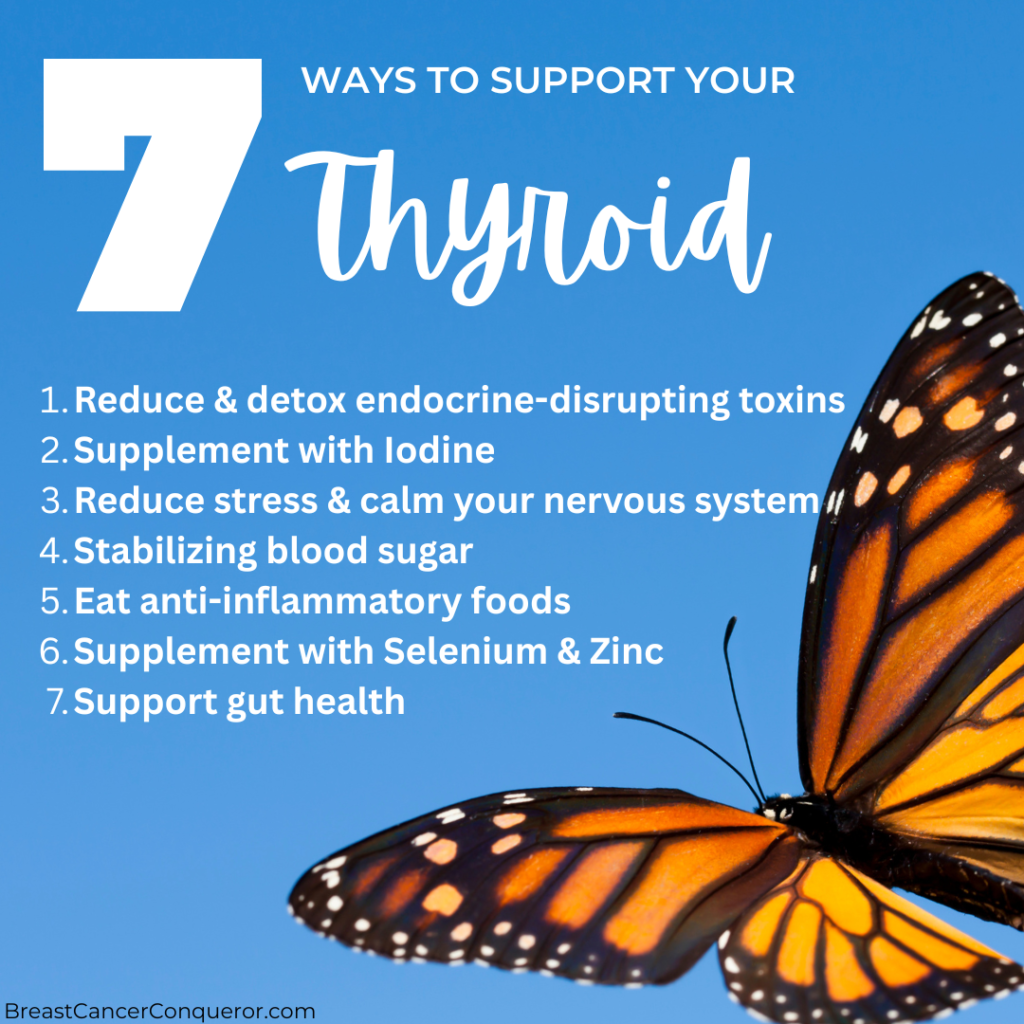
Natural Ways to Support Thyroid Health
Medical care is important when thyroid disease is present, but lifestyle support strengthens outcomes. This is true for everything, which is why we are so focused on integrative healing.
Key foundations include:
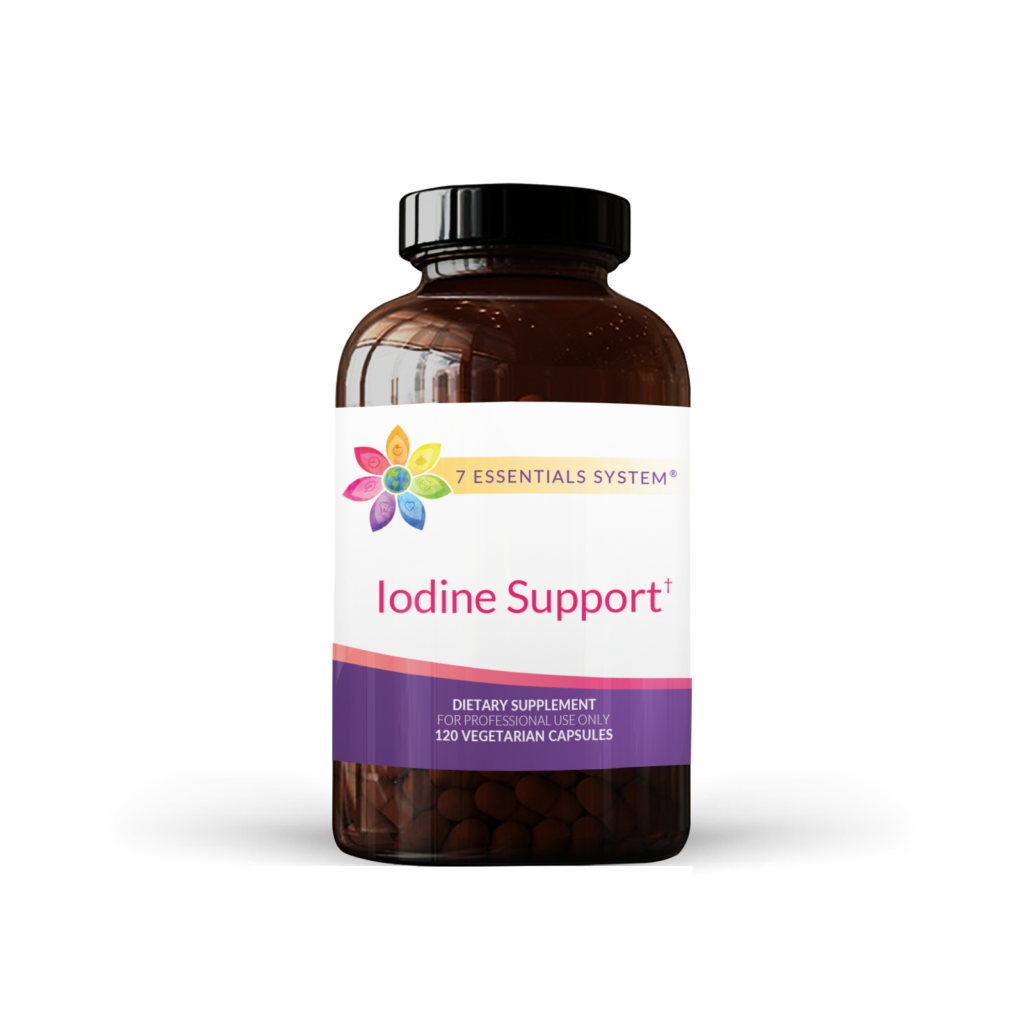
- Iodine from food and Iodine Support [11] supplements (guided by testing)
 [11]
[11] - Selenium [22] and zinc [23] for hormone balance, immune support, and general breast health. To learn more about optimizing selenium levels, please read this blog post [24].
- Stable blood sugar. Uncover the fascinating connection between blood sugar and cancer here. [25]
- Anti-inflammatory nutrition. Unearth our top 10 superfoods for breast cancer healing here [26].
- Gut health support. Your immune system lives in your gut; take good care of it! Click here to learn how [27].
- Stress reduction and nervous system regulation. Here are some of our top tips. [28]
- Reducing endocrine-disrupting toxins. Review our blogs for Essential #2 [29]: Reduce Your Toxic Exposure to learn more.
Thyroid support is not about forcing function; it’s about restoring balance.
Bring Back The Balance
Your thyroid may be small, but its impact is powerful. And when the balance is off, you are totally off. This is why we are so dedicated to providing education, empowerment, and support to help you make informed, confident decisions about balancing your hormones, stress, immunity, breast tissue health, and everything else!
You got this; we’ve got you!