Quick Read:
- Chronic fatigue, breast cancer, headaches, hormonal imbalance, autoimmune diseases, neurological issues, respiratory conditions, leaky gut, infections, weight loss resistance, EMF sensitivity, and oh-so-many other symptoms may all be traced back to mold.
- Mold produces mycotoxins, microscopic poisons that can wreak havoc on immunity, hormones, mitochondrial function, detoxification pathways, and so forth. All of these play a role in breast cancer development, recurrence, and general health.
- It is possible to test for mold (home and body) and safely and effectively detox it.
You can eat clean, detox regularly, and follow every healing strategy in the book—but if you have hidden mold exposure, your healing may feel like one step forward, three steps back.
Most people think mold is “musty walls and leaky basements.” But mold toxicity is far more common and damaging than most people realize. It hides behind walls, under sinks, below refrigerators, inside HVAC systems, and even lurks in healthy foods.
Mold produces mycotoxins, microscopic poisons that can wreak havoc on immunity, hormones, mitochondrial function, detoxification pathways, and so forth. All of these play a role in breast cancer development, recurrence, and general health.
Mold could be the culprit of your lingering, unexplained issues…
Chronic fatigue, headaches, hormonal imbalance, autoimmune diseases, neurological issues, respiratory conditions, leaky gut, infections, weight loss resistance, EMF sensitivity, and oh-so-many other symptoms may all be traced back to mold.
While this may all seem completely overwhelming, we are here to break it down and give you practical tips on how to test for, find, and properly remove mold from your body and home.
Use this blog post as your go-to guide, and if you ever have any questions (about anything), please feel comfortable reaching out via this form [1]. We are here for you, no matter what!
Mold vs. Mycotoxins
But first, let’s clear this up: People use these terms interchangeably, but they are NOT the same thing.
Mold = Living organism. It can be invisible and cause allergic reactions, respiratory symptoms, and immune stress. Think of mold as a plant.
Mycotoxins = The poison mold produces. Mycotoxins are chemicals produced by mold under stress to defend itself. They are microscopic, can survive heat and freezing, hide in fat tissues, are hard for the liver to detox, etc. They are also linked to serious issues such as cancer, neurological issues, immune suppression, hormone disruption, and mitochondrial damage. Think of mycotoxins as the plant’s toxic chemicals.
Even if the mold was removed, mycotoxins may still remain, which is why this is an issue to take seriously.
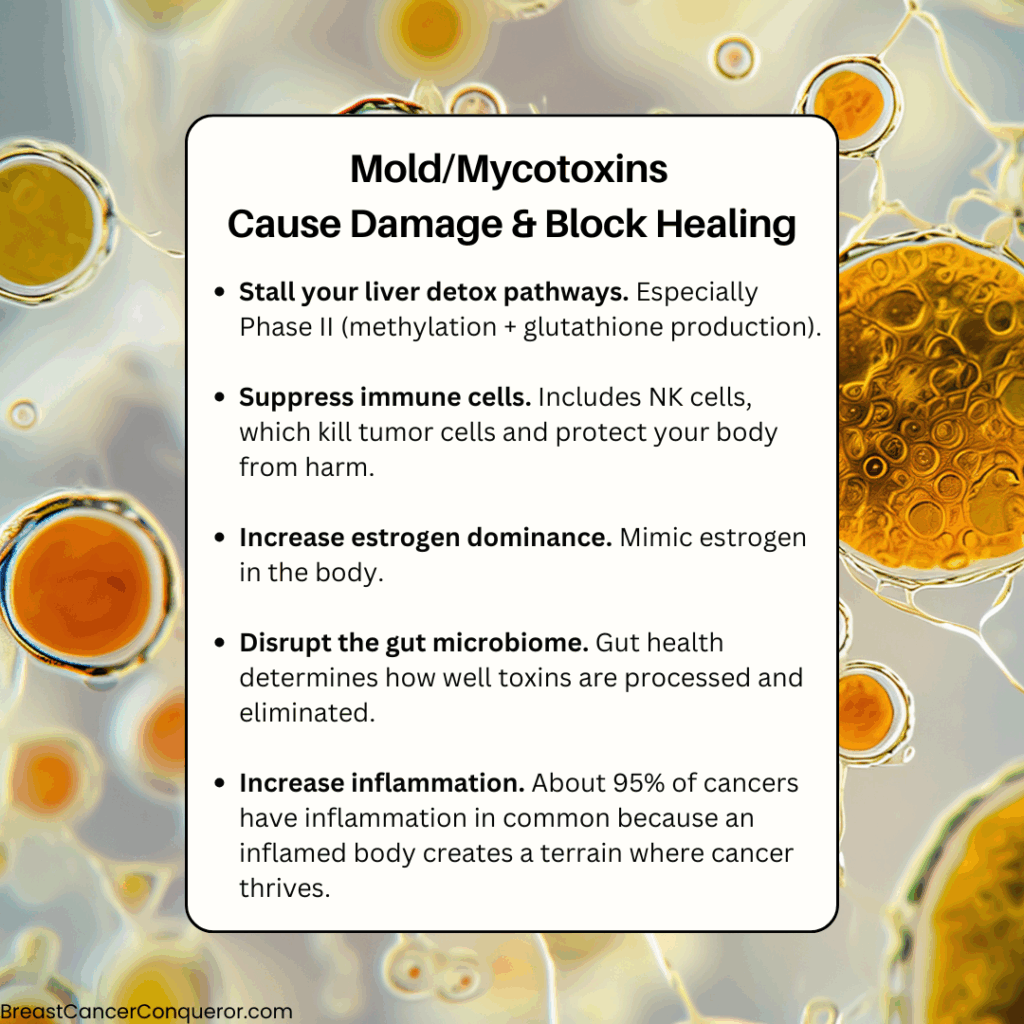
Mold isn’t just a home issue; it may be one of the causes of breast cancer and/or other health issues.
Mycotoxins are not just allergens—they’re biological disruptors. Research and clinical experience show that mold toxins can:
- Disrupt immune function
- Increase inflammation
- Alter hormone balance
- Interfere with liver detox pathways
- Promote oxidative stress
- Mess up the gut microbiome
- Contribute to mitochondrial dysfunction
- Increase vulnerability to chronic infections (like Epstein–Barr virus)
In real life, especially if you are someone who is “doing everything right,” the list above could look like these issues with mold at the center:
- Chronic fatigue or “wired-but-tired” energy
- Hormonal imbalances (especially estrogen dominance)
- Sinus congestion or persistent headaches
- Brain fog, memory issues, anxiety, or mood changes
- Digestive issues, SIBO, or unexplained bloating
- Tingling, numbness, or neuropathy
- Histamine intolerance
- Skin rashes or itchiness
- Frequent infections (candida, BV, etc.)
For breast cancer conquerors, all of this matters enormously. It is one of the main reasons that the 7 Essentials System® [2] includes Essential #2: Reduce Your Toxic Exposure. Your internal terrain determines whether cancer cells grow or shrink, and if mold is damaging that terrain, healing stalls.
While you can’t control everything, you do have the power to mindfully reduce the toxins that could live in your home, in the food you eat, and in what you put on your skin. For everything else, you can strategically detox through saunas, supplements, therapies, hydration, and many other methods explained below.
If you can relate to any of this, you may want to see if mold could be your missing link.
First Step: TEST for mold in your body.
Our mantra: Test, don’t stress, and guess! Applies to almost everything in life, and since most mold is hidden, testing your home and body can give you clear answers for what to do next.
1. Test Your Body for Mycotoxins
We recommend starting with a mycotoxin urine test, which measures the actual toxins produced by mold—not just antibodies.
The Dr. V – Exposure Test [3] from YourLabWork tests for a full toxic mold panel, mercury, lead, arsenic, Lyme Disease, Epstein-Barr Virus, and Adult Food Allergy. Heavy metals may cause symptoms similar to those of mold, so it is vital to test for them as well. To learn more about detoxing heavy metals from your body, please review this blog post. [4]
The results give you a roadmap before you spend time and money on remediation or detox protocols.
2. Test Your Home (Most mold is invisible) [5]
[5]
Based on the work of leading experts like Brian Karr (listen to his podcast episode here [5]), home testing should include: ERMI or EMMA testing. “Air sampling” often misses up to 90% of mold, so these advanced testing methods have become the gold standard. However, these tests only give you data. From there, a qualified inspector should then do:
- Moisture mapping
- Thermal imaging
- Wall cavity testing
- HVAC inspections
- Surface sampling to find exactly where the mold is hiding
For a more in-depth checklist on preventing, finding, and removing mold, please download the free guides Brian Karr offers. You can even set up a free call [6] with his team.
- Mold Prevention Cheat Sheet [7].
- Mistakes to Avoid During Remediation [8]
- How to Clean Your Stuff Safely
A few other ways mold sneaks into your body.
Even without household mold, moldy foods can trigger symptoms. Below is a list of unexpected foods that commonly contain mold. Many of them, such as flaxseeds, are foods you should absolutely be eating for health and healing; just be cautious about how you store them.
Common culprits:
- Flaxseeds: These tiny seeds can trigger apoptosis, slow metastasis, support hormonal balance, enhance traditional treatment outcomes, reduce inflammation, and improve overall cellular health…all with just about 25 grams a day. We highly suggest you eat them daily. However, NEVER buy pre-ground flaxseeds as most bags contain mold. Click here [9] to learn more about flaxseeds, how to eat them, and recipes to savor.
- Wheatgrass powders: Wheatgrass is one of the healthiest things you can drink, and it helps your body detox mold! Just be aware of how your greens are grown, because if your wheatgrass is grown indoors (such as in a juice shop), it may contain trace amounts of “white mold.” We only trust Dynamic Greens because they are truly the best, no rival. Click here [10] to dig up more info on wheatgrass!
- Coffee: Ah, even your morning must-have could contain coffee. However, many brands are mold-free, so just shop smart. If you do coffee enemas [11], this is especially important to avoid sending mold straight into your body.
- Peanuts and peanut butter: Peanuts grow underground, which makes them especially vulnerable to moisture, soil fungi, and improper storage. You could choose to eat low-mold nuts and butters (almonds, cashews, macadamia, etc.), or look for organic and aflatoxin-tested brands.
- Wine: If grapes and wine barrels are not properly cared for, they can grow mold. This usually happens with mass-produced cheap wine and wines from humid climates.
- Beer: Many people think they are “gluten intolerant,” but they’re actually reacting to mycotoxins in the grains. Additionally, malt houses are a high-humidity environment, perfect for mold growth.
While this is not a comprehensive list, it certainly underscores the importance of knowing where your food and beverages are made and of always opting for higher-quality options.
Is mold part of Breast Implant Illness?
Here’s another way mold sneaks into your body and stays there! Ekk! Mold can grow inside saline implants and implant valves, as well as on the scar tissue surrounding implants. Honestly, saline and silicone breast implants are like toxic soups in your body.
This is because saline implants are not sealed airtight, and the filling valves are not 100% secure. As a result, bodily fluids, yeast, molds, and bacteria can enter the implant, leading to numerous health issues. For a deeper dive, please review our blog post on breast implant illness [12].
How mold and mycotoxins block your breast cancer healing pathways.
Here’s a quick overview of how specific molds can harm your body, and ways that mold and mycotoxins can damage your body and prevent healing from happening.
Zearalenone (ZEA): An estrogen-mimicking mycotoxin that can stimulate the growth of breast cancer cells. It’s strongly linked to hormonal disruption, early puberty, infertility, and a higher risk of reproductive cancers. (Study [13])
Aflatoxins: Potent carcinogenic mycotoxins shown in animal studies to cause DNA damage and promote cancer development. Recent studies [14] suggest a potential link to breast cancer as well.
Ochratoxin A (OTA): Found at higher levels in the blood of many breast cancer patients (especially older women), likely due to immunosuppression and the overall toxicity of OTA. (Study [15])
The effects of mycotoxins can:
1. Stall your liver detox pathways. Especially Phase II (methylation [16] + glutathione [17] production).
2. Suppress immune cells. This includes NK cells [18], which are critical for breast cancer defense.
3. Increase estrogen dominance. Mycotoxins like zearalenone mimic estrogen in the body. To learn more about “bad” estrogen, please read this blog post on metalloestrogens [19] and this one on phytoestrogens vs. xenoestrogens [20].
4. Disrupt the gut microbiome. To learn more about your microbiome, please review these blogs and podcast episodes: Gut health [21], vaginal microbiome [22], breast microbiome [23], SIBO [24], and gut health and parasites [25].
5. Increase inflammation. About 95% of cancers have inflammation in common because an inflamed body creates a terrain where cancer thrives. Click here [26] to learn more about inflammation and cancer.
This is why mold detox requires attention on multiple systems—not just “kill the mold below the fridge.”
Solutions: How to detox mold safely and effectively
Below are the steps that our coaches [27] most often recommend. Please note: this is general advice, and not for your unique path. Please always talk to your medical team before trying anything new.
Here’s how your body detoxes:
- Liver. Phase I and II detox pathways (the main detox organ)
- Kidneys. Filter blood + remove toxins through urine
- Gut. Eliminates toxins through stool
- Lymphatic system. Transports waste
- Skin. The fastest exit out of your body. This is why rashes, acne, itching, and eczema happen when your detox pathways are overwhelmed.
A few ways you can optimize your body’s ability to detox:
1. Supercharge your liver with detox support. 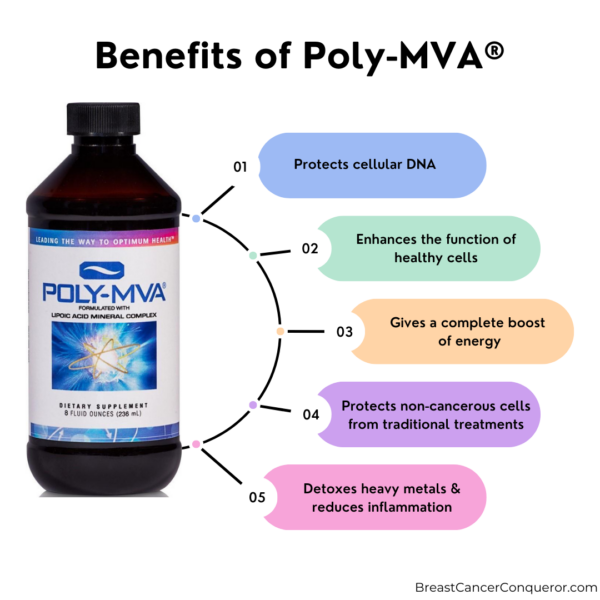 [28]
[28]
Our livers are not designed to handle the onslaught of toxins they face in today’s world. That being said, there are plenty of innovative and effective things you can do at home to improve the body’s ability to strengthen pathways and detox:
- Coffee enemas. Discover everything you need to know here [11].
- Herbs. Milk thistle and dandelion root. Click here [29] to learn more about making dandelion into a detoxifying tea.
- Antioxidants. Alpha Lipoic Acid (ALA), such as Poly-MVA® [30] and Glutathione [17].
- Chlorella. This algae gently detoxes stubborn toxins (mercury, mold, metals, etc.) from your cells, gut, blood, and across your body. For a deep dive, please review this blog post [31].
3. Sweat out toxins
Sweating helps eliminate toxins through the skin, a major detox organ.
Ways to sweat:
- Infrared saunas
- Epsom salt baths
- HIIT or brisk walking
- Hot yoga
Hot tip: Stay hydrated by adding electrolytes and drinking enough to avoid dehydration. [32]
[32]
4. Strengthen gut health and eat a detoxifying diet
Gut health determines how well toxins are processed and eliminated, so seek out foods that detox and lower inflammation.
Focus on:
- Probiotics [32]
- Fermented vegetables, such as our homemade sauerkraut recipe. [33]
- Fiber-rich foods (veggies, chia, and flax)
- Polyphenol-rich foods (berries, herbs, greens)
- Clean proteins (wild salmon, grass-fed meats, organic eggs)
- Healthy fats (olive oil [34] and avocados)
5. EBOO & HOCATT Therapies
For those who need deeper support, EBOO (Extracorporeal Blood Oxygenation and Ozonation) and HOCATT™ (Hyperthermic Ozone & Carbonic Acid Transdermal Technology) may help.
EBOO assists with:
- Removing circulating toxins
- Filtering out pathogenic bacteria, fungi, mold, biofilm, heavy metals, etc.
- Improving mitochondrial function
- Enhancing oxygenation
- Fighting chronic infections
For more insight, please check out this blog post. [35] EBOO is not necessary for everyone, but it can be a powerful tool for stubborn mold toxicity.
HOCATT indirectly assists because it provides the following powerful healing tools: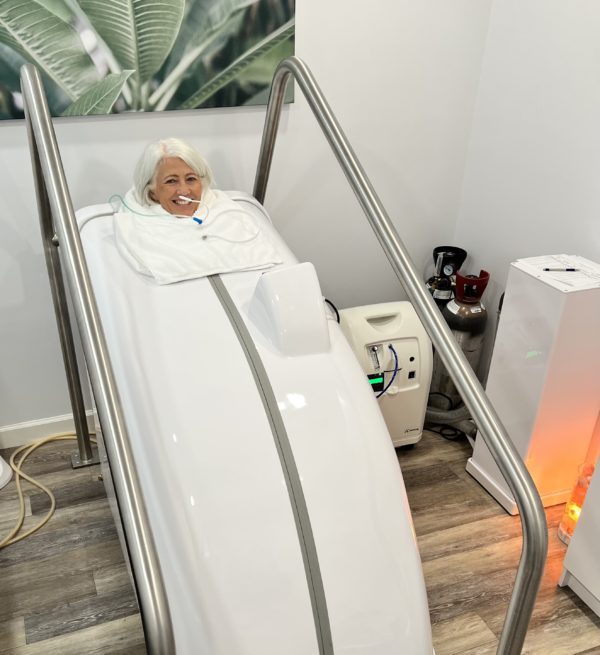 [36]
[36]
- Ozone Therapy
- Far Infrared
- Microcurrent Therapy
- Carbonic Acid
- Whole Body Hyperthermia
- Photon Light Therapy
- Aromatherapy
- PEMF (Pulsed ElectroMagnetic Field) Therapy
For more details and to get a better idea of Dr. V’s experience with HOCATT, please review this blog post [36].
Never fear mold or breast cancer again!
Mold toxicity is one of the most overlooked contributors to breast cancer and chronic illness. But once you identify it and address it, your healing often accelerates. Energy returns. Brain fog lifts. Hormones balance. The terrain shifts.
Use the info in this blog post as your guide, and make sure to listen (or relisten!) to Brian Karr’s podcast episode [5] on bold and breast cancer.
You can eliminate mold, rebuild your terrain, and move forward with strength, resilience, and clarity! We are here to help you with every step.