Quick Read:
- Research shows that unmanaged stress, inflammation, and immune suppression before surgery can affect recovery time, pain perception, and complications. When you prepare your body and nervous system in advance, you improve resilience and support smoother healing.
- As always, you have options. For example, you can choose to get a maker clip, remove all lymph nodes, and perhaps a surgical alternative may be a better option.
- Your emotional health is just as important as your physical health, which is another reason why Essential #3 is Balance Your Energy and #4 is Heal Your Emotional Wounds of Dr. V’s 7 Essentials System® [1]. Below are therapies to help you regulate your nervous system before and after surgery or a biopsy.
A note to you, dear Wellness Warrior:
At Breast Cancer Conqueror, we believe in integrative oncology and whole-body healing. Say bye to rigid systems that force you to choose between conventional treatment and natural therapies. Because you can now welcome creating a customized plan that brings together what YOU need from natural and conventional medicine and therapies for your optimal health and healing. If surgery is part of your healing journey, let’s work together to enhance your quality of life and outcomes through integrative support.
Use this blog as your whole-body, whole-person guide to pre-surgery clarity and confidence and continuous, transformative healing post-surgery and beyond. However, this blog only provides general education and advice. For customized support, please always talk to your medical team and reach out to our private coaches [2].
–
Preparing for breast cancer surgery or even a biopsy can feel overwhelming. Between medical decisions, emotional uncertainty, and recovery planning, many women have shared that they feel like they are spinning into a tornado of fear and anxiety. And that’s totally understandable, but you do have the capacity to quiet the storm brewing in your body and prepare for it with strategic supplements, therapies, and an empowered plan.
Below, we share the latest research, practical preparation strategies, and holistic support to help you walk into surgery or a biopsy informed, grounded, and supported. Whether you are actively planning for surgery, in the consideration stages, or even supporting a loved one through it, we hope that this guide provides sage wisdom, calming clarity, and confident decision-making.
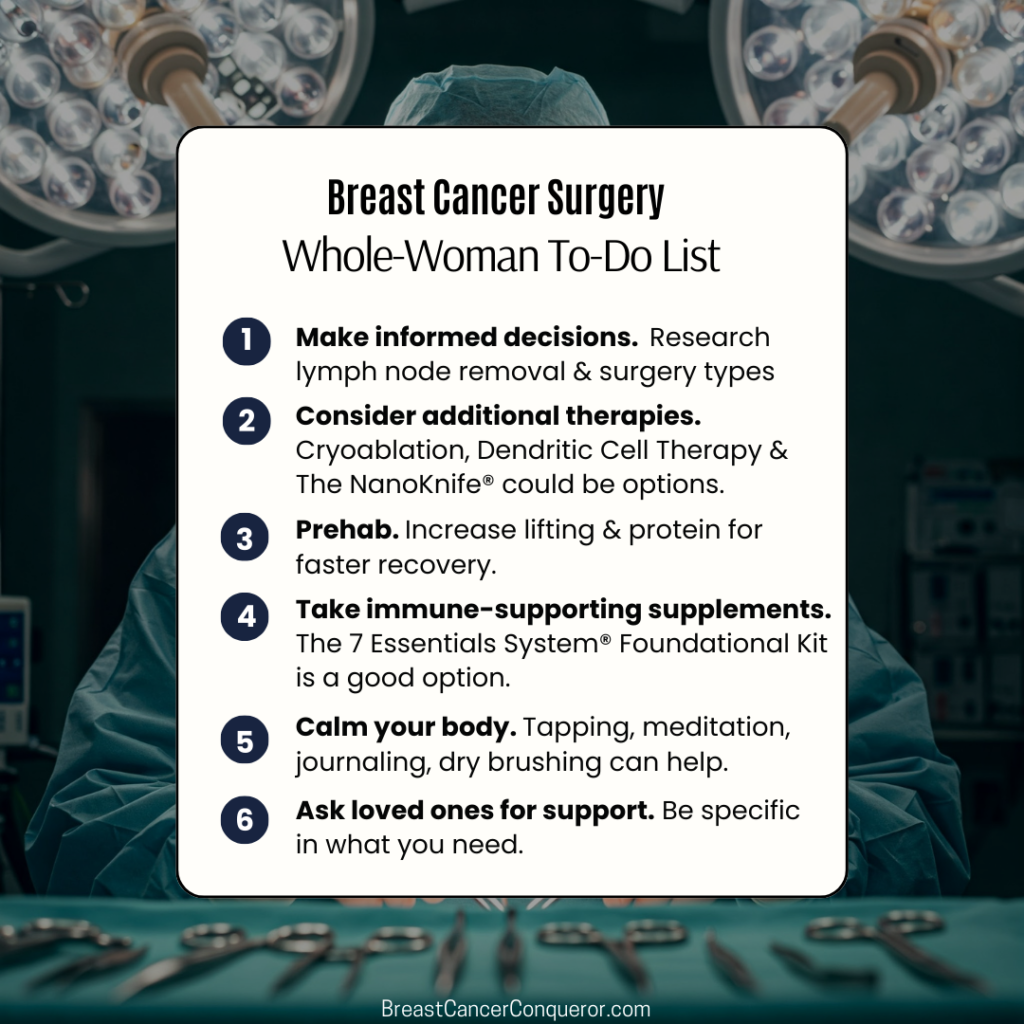
Strategic Preparation = Optimal Outcomes
Preparation is not about controlling outcomes. It’s about creating the best internal environment for healing.
Research [3] shows that unmanaged stress, inflammation, and immune suppression before surgery can affect recovery time, pain perception, and complications. When you prepare your body and nervous system in advance, you improve resilience and support smoother healing.
Preparation helps you:
- Reduce anxiety and fear of the unknown
- Support immune function and inflammation control
- Lower pain by lowering stress
- Improve surgical recovery and comfort
- Make informed, personalized decisions
- Feel more confident and supported
Lumpectomy or. Mastectomy? Which Is Better?
For far too long, women were led to believe that removing more breast tissue automatically meant better survival. However, newer studies [4] now show that for many early-stage breast cancers, lumpectomy followed by radiation offers survival rates comparable to mastectomy.
In some studies, lumpectomy has even been associated with better quality of life and potentially improved long-term outcomes, likely due to advances in surgical techniques, radiation precision, and follow-up care.
When Lumpectomy May Be Appropriate
Lumpectomy may be a good option when:
- Cancer is early stage and localized
- There is a single tumor
- Clear margins can be achieved
- Radiation therapy is safe and appropriate
- Preserving breast tissue aligns with your personal values
Many women and their doctors find that lumpectomy allows for:
- Shorter recovery times
- Less impact on body image
- Effective cancer control with modern radiation
When Mastectomy May Be the Safer Choice
Mastectomy may be recommended in cases such as:
- Inflammatory breast cancer
- Multiple tumors in one breast
- Large tumor size relative to breast volume
- Tumor involvement of the skin or the chest wall
- Inability to receive radiation (pregnancy [5], autoimmune disease)
- Previous radiation to the chest
Making a surgical choice is about what is safest and most aligned with your individual diagnosis and life circumstances. You also do not need to go with the first doctor who suggests a plan; second and even third opinions can provide additional information and new ideas. The same goes with a surgeon; always know that you can and should seek out different surgeons until you find one that you feel comfortable and confident with.
Preparing for a Breast Biopsy
Biopsies are the gold standard for knowing exactly what a specific tissue sample is. Some tissues can look normal on an MRI, mammogram, or ultrasound. For example, an ultrasound may show you have a cyst because it shows a small balloon shape, but the biopsy may prove the type of cancer and the hormone receptor status.
However, needle biopsies may lead to further damage to the cancer cells, as they could break the barrier of the tumor wall and release cancer cells into your system. For more information, please review the studies in this blog post [6].
Note: As always, it is important to discuss the pros and cons of any medical procedure with your health team to determine whether it is the right choice for you. Everything we share on this blog is for general information only.
Marker Clips: What You Should Know
During a biopsy, a small marker clip (often titanium) may be placed to mark the biopsy site. These clips are used to easily identify the biopsy site on scans and may also help surgeons ensure they are removing the proper tissue. However, you can choose not to get one, and here are Dr. V’s thoughts on opting out of a marker clip:
“Except for rare medical situations and conditions, foreign objects (including a titanium marker clip during a biopsy) should be carefully considered before being placed in your body. Your immune system will attack the foreign invader, pushing your body into a highly inflamed state. This can lead to autoimmune reactions (such as Lupus or Hashimoto’s thyroiditis) because your body mistakenly thinks it needs to attack itself.” To understand her full position and learn more about markers, please review this blog post [7].
Lymph Nodes and Surgical Decisions
Similar to a mascotony, the aggressive “get it all” mentality may not be your best option—especially when it comes to lymph nodes.
We now know that breast cancer starts in your cells, and healing requires a full mind, body, and soul transformation. Additionally, lymph nodes, especially those in the armpit (axillary nodes), are part of your immune system. They are small, bean-shaped structures that filter lymphatic fluid and contain lymphocytes (white blood cells) that protect your body by filtering lymph fluid, identifying and destroying pathogens, and initiating immune responses. Therefore, anything designed to protect your body from diseases, infections, and illnesses should only be removed if absolutely necessary.
The axillary nodes are part of a larger network of lymph nodes throughout your body, so removing some of them will throw off your entire lymphatic system, which plays a crucial role in preventing and stopping the cancer.
Therefore, before making a blind decision to remove your lymph nodes, please take a moment to read this blog post. [8] It doesn’t have to be all or none–it could be a strategic some. As always, discuss your options with your physician and health care team so you can make an informed decision.
Alternatives or Additions to Traditional Breast Cancer Surgery
Cryoablation
For select cases of early-stage breast cancer (particularly tumors less than 2 cm and often even smaller), cryoablation [9] offers a minimally invasive alternative to surgical excision. This low-risk outpatient procedure takes about 90 minutes and uses extreme cold to “freeze” and kill tumor cells without a large incision.
The MD Anderson Center recently did a trial [10] on the effectiveness of cryoablation for breast cancer patients and found these thrilling results: At all 19 cancer centers, cryoablation killed 92% of cancers (no remaining cancer was found), and 100% of tumors were killed! These are promising results, and doctors are hopeful that this therapy can work on more advanced stages of cancer in the future.
For more details, please review this blog post [9].
Dendritic Cell Immunotherapy
Dendritic cells are the immune system’s “teachers.” They show your own T cells what to look for so they can seek out and destroy cancer cells. Dendritic cell therapy [11] harnesses this process to create a personalized immune attack against your cancer.
Clinical research indicates that dendritic cell vaccines:
- Can be created from a patient’s own immune cells exposed to tumor antigens
- May enhance immune responses when combined with standard therapies (such as chemo or surgery)
- Have shown promise in trials, including improved pathologic responses in some breast cancer subtypes
- Are being tested in combination with treatments like checkpoint inhibitors to boost effectiveness
Dendritic cell therapy is not typically a standalone replacement for traditional treatment in all cases, but it is a growing immunotherapy option that may be used:
- After surgery to help eliminate residual disease
- As part of a combination immunotherapy strategy
- In early-stage and advanced breast cancer protocols
- In settings where conventional treatments are limited by side effects or resistance
For more information on Dendritic Cell Therapy, please read this blog post [11].
The NanoKnife®
It uses two or more minimally invasive needle electrodes (that look like tiny knives) positioned within the diseased tissue. This enables a physician to sculpt and control cell death in the ablation zone using various electrode configurations for unmatched precision. The whole procedure takes about an hour, and most people recover in 2 days or less.
Please learn more about the NanoKnife via this blog [12].
 [13]Prehabilitation
Just as a hiker prepares to scale a massive mountain with training, nutrition, mindset, research, and so forth, you should do the same. For a deep dive into preparing for surgery (and recovery), please listen to this podcast episode [13] with integrative health surgeon Rebecca Knackstedt, MD, Ph.D.
The episode is jam-packed with helpful tips, but here are Dr. Knackstedt’s top three suggestions:
Increase your protein and weight lifting.
Your body will be in a state of recovery and will need amino acids to rebuild tissue. Skipping on protein can lead to fatigue, swelling, and even wound breakdown. Additionally, your body needs fuel after surgery to heal, so it will break down the protein in your muscles, which is why you need more reserves. Also, let’s be realistic: after surgery, you won’t be hitting the gym right away, so being able to work out beforehand to give your body an extra boost when it needs it most is essential. We suggest HIIT workouts [14], and for protein powder suggestions, please check out this blog post. [15] Lastly, when eating animal protein, look for pasture-raised and grassfed options.
Normalize the fact that you are stressed out and let it off your chest (literally).
Claim it. Of course, you’re stressed and not sleeping well before a major surgery. This is totally normal. Just giving yourself permission to acknowledge you are scared and worried can sometimes help you let it go or seek out the support you need. Research [16] has proven that fear of surgery, anxiety about the unknown, and concerns about postoperative pain can all intensify pain signals, making patients feel more pain and thus require more narcotics. The more you normalize, the less stressed you will be, and the better your outcome will be. Here are a few tips [17] on consciously lowering your stress levels.
Wash your hair before surgery.
Not because you need to look good, but because it may be the last time you can easily wash your hair for several days. It’s the little things that also matter.
Holistic Support Before Breast Cancer Surgery
Supporting your immune system and reducing inflammation before surgery can help optimize healing. Even as science advances, your daily choices still matter more than you think! Nourish your immune and nervous system with:
- Whole, organic, plant-based foods. Try some of our delectable recipes [18]!
- Deep, restorative sleep. Click here [19] for sleeping tips.
- Daily movement. Click here [14] to learn more about exercise oncology.
- Intentionally reduce stress. Click here [17] for our top practices.
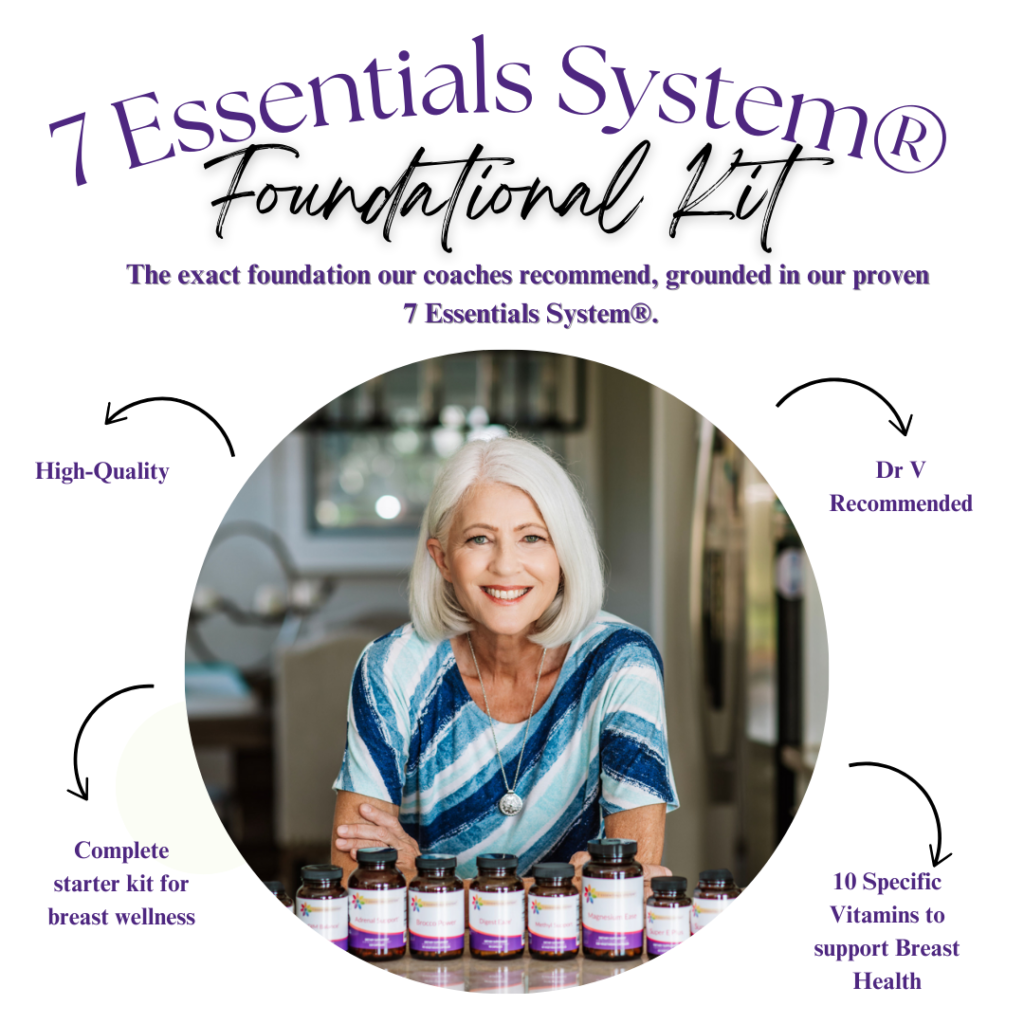
- Immune-supportive supplements. The 7 Essentials System® Foundational Kit [20] provides a powerful foundation to optimize surgical outcomes.
- Detox and stop the spread with Modified Citrus Pectin. MCP helps your body detox heavy metals from the surgical (and daily life) and may stop cancer cells from growing. Learn more via this blog post. [21]
- Poly-MVA®. It’s an innovative blend known for energizing before and after surgery, reducing inflammation, detoxing, and preventing the spread of cancer. Learn more here [22].
- Friends. Connection, support, laughs, and fun times should intentionally be part of your healing journey. Click here [23] to discover why.
Note: Always discuss any supplements you are taking with your surgeon, as it may be necessary to take a break prior to surgery.
 [20]
[20]
Emotional, Mental, and Spiritual Preparation
Your emotional health is just as important as your physical health, which is another reason why Essential #3 is Balance Your Energy and #4 is Heal Your Emotional Wounds of Dr. V’s 7 Essentials System® [1]. Both surgery and a biopsy can leave you feeling drained, anxious, exhausted, and depressed. They also impact identity, safety, and emotional well-being.
However, it doesn’t have to be that way. You can take actionable steps to bring calm sunshine to your life and protect your mental wellness. And whatever you do for your mental health, you do for your physical health.
For example, your nervous system is one of the most influential healing forces in your body. It determines how you respond to stress, digest food, regulate hormones, eliminate toxins, repair cells, and even how effectively your immune system can protect you. Therefore, learning how to work with your nervous system rather than against it is one of the most important steps you can take to prepare for surgery and life in general.
Below are some practices that can help. For more personalized support and someone to walk you through the therapies, consider working with a Private Coach [2].
- EFT/Tapping. It is a mind-body practice that combines gentle tapping on specific acupressure points with focused statements about stress or emotional challenges. This process helps calm the amygdala (the brain’s fear center) while sending safety signals through the nervous system. By stimulating acupressure or meridian points and acknowledging emotions, tapping lowers cortisol, releases stored tension, and shifts the body into a parasympathetic “rest and heal” state. It’s a simple, accessible tool anyone can use to reduce stress and support emotional and physical healing. Tap into this blog post [24] for more information.
- Meditation and breathwork. Simple techniques calm your nervous system and reduce stress hormones. Click here [25] for our blog for simple tips and techniques to try today, and here [26] to listen to a podcast episode with Dr. V.
- Intentionally support your nervous system. Massage, dry brushing, warm baths, journaling, or quiet reading can bring relief, connection to your body, and joy. Click here [27] for several therapies that have helped countless women in your shoes.
- Be specific about how you need to be supported. People truly want to show up for you; they just need to know how. Tell your loved ones directly what you need: Please watch this funny rom-com with me. Take me to get Thai food for dinner, or deliver it to my house and sit with me on the couch. Go on a walk with me tomorrow at 3 pm.
Indulge yourself in all the powerful medicines above. They are more available – and more powerful – than you may even realize.
Practical Surgery and Biopsy Checklist
Before Surgery or Biopsy
- Confirm procedure details and recovery expectations.
- Review medications and supplements, and write them down on an easy-to-follow chart.
- Arrange transportation and home support.
- Prepare nourishing meals and a recovery space.
- Prioritize sleep and hydration.
- Breathe deeply and tell yourself affirmations.
Day of Procedure
- Follow fasting instructions exactly.
- Wear loose, front-opening clothing.
- Bring a supportive bra if recommended. Click here [28] to learn more about our thoughts on bras.
After Surgery or Biopsy
- Follow wound-care instructions.
- Use pain support as directed.
- Walk gently to support circulation.
- Watch for signs of infection.
- Rest without guilt.
- Give yourself big hugs and extra love.
Preparing for Breast Cancer Surgery = Preparing for Life.
When you combine informed medical decisions with whole-person support, you give your body the strongest possible foundation for healing.
You are not just preparing for surgery. You are preparing for recovery, resilience, and vibrantly life beyond diagnosis!
For our post-surgery guide, please review this blog post. [29] Always know and take comfort in the assurance that we are with you every day of your journey. For any and all questions, please reach out to us [30] at any time, and Ginger or Jennifer will respond ASAP.