
Quick Read:
- Milk is not inherently inflammatory, nor is it the enemy—chemicals, ultra-processing, and synthetic hormones are.
- You should always consider the source of the milk: Is it raw, organic and pasture raised, or ulta-processed conventional milk? There are all very different products.
- If you have a milk allergy, it could actually be due to lactose, beta-casein, or low-fat vs. whole-fat milk.
- Dairy products such as butter and ghee can be a healthy and nourishing alternative to harmful seed oils.
Dairy is one of the most misunderstood and unfairly blamed topics in the modern nutrition conversation, especially when it comes to breast cancer healing. Somewhere along the way, milk became a single villainized category, rather than what it actually is: a spectrum of foods ranging from highly processed chemical cocktails to deeply nourishing traditional foods.
That distinction matters a lot! Because the real issue isn’t dairy itself.
The short answer: It’s how the dairy is produced, processed, and tolerated by your body.
The longer answer: Read this blog post to uncover what actually matters when it comes to dairy, inflammation, hormones, digestion, and healing—without fear, dogma, biases, misinformation, or oversimplification.
Not All Milk Is Created Equal
One of the biggest mistakes in nutrition science (and, let’s be real: social media) is lumping raw milk, organic pasture-raised milk, and ultra-processed conventional milk into the same category. They are each completely different drinks.
- Raw milk: When purchased from organic, pasture-raised, grass-fed farms, raw dairy can be a healing, whole food that supports microbial diversity, strengthens your gut barrier, reduces inflammation, and boosts your body with a powerful range of vitamins and minerals. However, it is not for everyone. It could contain harmful pathogens (from poor sanitation, storage, etc.) and cause problems if you are undergoing chemotherapy, have an active gut infection (SIBO, IBS, etc.), are casein-sensitive, or are pregnant.
- Organic pasture-raised milk: This high-quality dairy (organic, pasture-raised, and grass-fed) is rich in omega-3s, vitamins, and healthy fats. It has cut out the harmful antibiotics, synthetic hormones, GMOs, and other issues people associate with milk.
- Ultra-processed conventional milk: This kind of milk is a highly processed industrial product—and your body knows the difference. It’s packed with harmful toxins such as pesticides, GMOs, and synthetic hormones, and produced from chronically stressed-out animals that rarely even see the sun or feel fresh air.
As you can see, each milk is utterly different and should never be grouped into one category.
But there are even more things to consider: the fat content, the difference between A1 and A2 cows, and so forth. So let’s keep grazing on this pasture of info. Butter be safe than sorry!
The Overlooked Details: Lactose, Beta-Casein & Protein
Is Lactose the real issue?
Another critical piece of the puzzle is digestion—especially lactose tolerance. While it’s often assumed people react to milk proteins, many reactions are actually due to lactose, the sugar in milk. Lactose requires the enzyme lactase for digestion; raw milk naturally contains lactase, but pasteurization destroys it.
Therefore, if you don’t produce enough lactase, pasteurized milk can cause bloating, gas, or discomfort. This is why people who are “allergic to milk” can often enjoy raw milk without any issues.
What about Beta-Casein?
Milk contains a protein called beta-casein, which comes primarily in two forms: A1 and A2. A1 beta-casein can break down during digestion into BCM-7, a compound linked to gut irritation and inflammation in sensitive individuals. A2 beta-casein does not produce BCM-7.
This helps explain why many people who “can’t tolerate dairy” do just fine with A2 milk, butter, ghee, and cheese. It’s often not dairy itself—it’s the type of dairy. A2 milk also tends to be richer in naturally occurring vitamins, minerals, beneficial fats, and omega-3s, especially when it comes from pasture-raised, grass-fed cows.
This distinction may also help explain why only about 5–15% of Europeans are considered dairy-intolerant, compared to 36–44% of Americans. Traditional European herds include a higher proportion of A2-producing cows, while the U.S. dairy supply is largely dominated by cows producing A1 or mixed A1/A2 milk. For more details on A1 Vs. A2 milk, please read this blog post.
Suddenly, it makes sense why so many people say “dairy doesn’t bother me in Europe.” It’s the same reason why gluten-free people can show down on pasta in Italy. It’s not the gluten in the pasta; it’s the GMOs and toxins that Americans pack into our breads, pastas, and pizzas.
Once again, this isn’t about absolutes. It’s about precision, sourcing, and personalization.
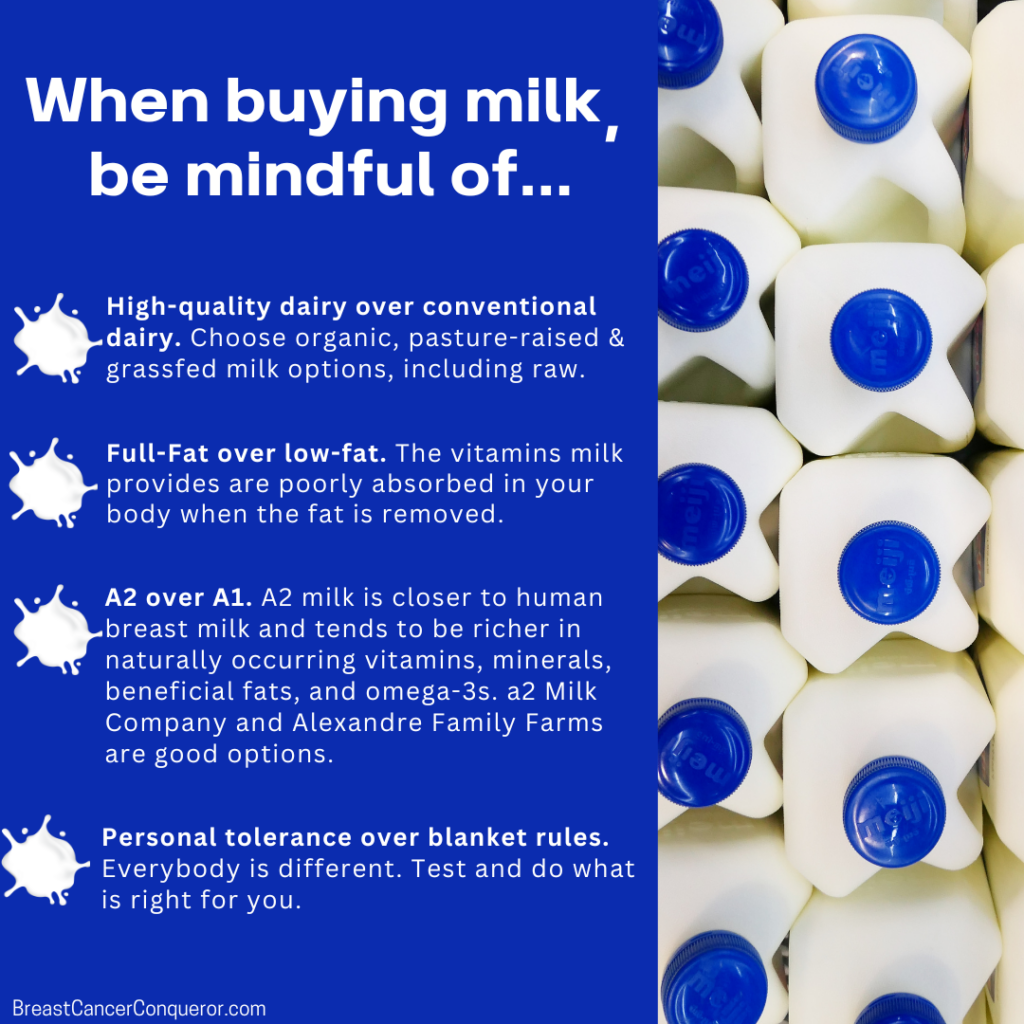
If you live in America and are curious about trying A2 milk, look for a2 Milk Company and Alexandre Family Farms on most grocery store milk aisles.
What about the protein benefits?
Yes, high-quality milk is still a way to pack in some of the protein you need for vibrant health. Protein is essential for:
- Tissue repair
- Immune function
- Blood sugar stability
- Detox pathways
- Energy
- Hormone regulation
- Muscle building and injury prevention
- Osteoporosis prevention
For many women, plant-based diets alone do not provide enough bioavailable protein, especially during cancer treatment or recovery. Dairy (such as kefir, cottage cheese, ghee, and raw or organic dairy) can be a valuable, digestible protein source when tolerated.
To learn more about eating animal proteins, please read these blogs:
- Are There Protein Deficiencies In Plant-Based Diets?
- Protein for Breast Cancer: The Key to Osteoporosis Prevention
- Here’s What to Look for When Buying Protein Powder
- Dr. V’s Top Tips for Thriving During Chemo
Should I drink full-fat or low-fat milk?
When dairy is tolerated, full-fat versions are the most biologically beneficial choice. Dairy fat carries critical fat-soluble vitamins—including A, D, E, and K2—that play key roles in immune function, hormone balance, and cellular health, and these nutrients are poorly absorbed when the fat is removed.
Additionally, low-fat and nonfat dairy tend to raise insulin and blood sugar more rapidly, which can contribute to inflammation and metabolic stress—both of which promote cancer growth and make cells resistant to treatments (learn more here). Full-fat dairy slows digestion, improves satiety, supports stable blood sugar, and delivers a more complete nutrient package.
In short, when quality and tolerance are addressed, removing the fat removes much of the benefit. So if you do choose to drink milk, enjoy your whole milk for whole-body health and healing!
Dairy-Based Cooking Oil Alternatives Can Be Key To Your Healing
One of the most powerful ways dairy supports healing is through healthy cooking fats. Replacing seed oils (soybean oil, canola oil, corn oil, etc.) with butter or ghee is one of the simplest, most impactful dietary shifts you can make.
Butter and ghee:
- They are stable at higher heat
- Provide a safe, healthy, and delicious way to cook
- Do not oxidize like seed oils
- Support cellular health
- Provide fat-soluble vitamins
- Reduce inflammatory load compared to vegetable oils
Many health experts say seed oils are worse than cigarettes because of their potent amounts of chemicals, toxins, and omega-6 fatty acids (the bad type of omegas). However, swapping them out for olive oil, coconut oil, avocado oil, or butter and ghee is one of the easiest ways to avoid harmful toxins and pour nourishment into your healing journey. Click here to learn more about seed oils and an app that tells you which restaurants use safe, healing oils.
Dairy, Gut Health, and Breast Cancer Healing
Whether dairy supports or disrupts healing depends on several factors:
- The status of your gut barrier
- Whether you have IBS or SIBO (Click here for an insightful podcast episode on SIBO)
- Gluten sensitivity or cross-reactivity
- Raw vs. pasteurized dairy
- A1 vs. A2 proteins
- Overall inflammatory load of your diet
- If your dairy is filled with harmful toxins
If your gut is inflamed or compromised, any reactive food can be a problem—temporarily. That’s why elimination and reintroduction can help you make an educated decision:
- Remove dairy for 30 days
- Reintroduce slowly
- Observe how your body responds
So…What Should I do?
The honest answer is: it depends.
Here’s what the science does support:
- High-quality dairy ≠ conventional dairy
- Full-fat dairy ≠ low-fat dairy
- Raw or gently processed ≠ ultra-processed
- A2 dairy ≠ A1 dairy
- Personal tolerance > blanket rules
Milk is not inherently inflammatory, nor is it the enemy—chemicals, ultra-processing, and synthetic hormones are. If you choose the highest-quality dairy that supports your digestion, protein intake, metabolic health, and emotional nourishment, it can absolutely fit into a healing-focused lifestyle. That being said, every body and healing journey is unique—so do the detective work and make evidence-based decisions that are right for you!